
Notice: Test mode is enabled. While in test mode no live donations are processed.

$ 0
Select Payment Method
Apoio Healthbot

Blog Post

Compassion

Robots, AI, and the Future of Cancer Relapse Prevention

“Robotic drug testing is helping scientists uncover the hidden cancer cells that survive treatment, offering new hope for preventing relapse.”

Cancer treatment has made major progress, but one of oncology’s toughest challenges remains: what happens when a few cancer cells survive therapy, hide in the body, and later trigger relapse? A new wave of robotic drug testing is giving scientists a faster, more precise way to study these “lurking” cancer cells and identify therapies that may stop them before they return.

According to a recent Reuters Health Rounds report, researchers are using robots to test potential treatments against rare “persister” cancer cells, which can survive initial therapy and seed recurrence later. These cells may be as rare as one in every thousand tumor cells, making them difficult to detect with traditional laboratory methods. [Reuters]

The breakthrough, reported by UC San Francisco researchers and published in Science Advances, used a robotic platform to study thousands of miniature lung tumors at once. Instead of manually running around 10,000 week-long experiments, the team used robotic systems, controlled incubators, precise drug dosing, staining stations, and microscopic imaging to test 94 drug candidates against cancer cells that survived standard treatment.


Why Persister Cancer Cells Matter

Persister cells are not always genetically different from the original tumor. That is what makes them so dangerous. They can temporarily shift into a drug-tolerant state, survive treatment, and later help cancer return in a more resistant form. In practical terms, a tumor may appear to respond well to therapy, but a hidden minority of cells can remain.

This is a major concern for lung cancer, breast cancer, colorectal cancer, and other cancers where relapse after initial response remains a clinical challenge. For patients, recurrence often means more scans, more biopsies, more expensive drugs, and greater emotional strain. For health systems, especially in resource-limited settings, relapse adds pressure to already stretched oncology services.

The new robotic approach matters because it changes the scale of discovery. Researchers can now test many drugs, doses, and tumor conditions in parallel. That means faster learning, better reproducibility, and a clearer view of which therapies may work across different patient samples.


How Robots Improve Drug Tests for Catching Lurking Cancer Cells

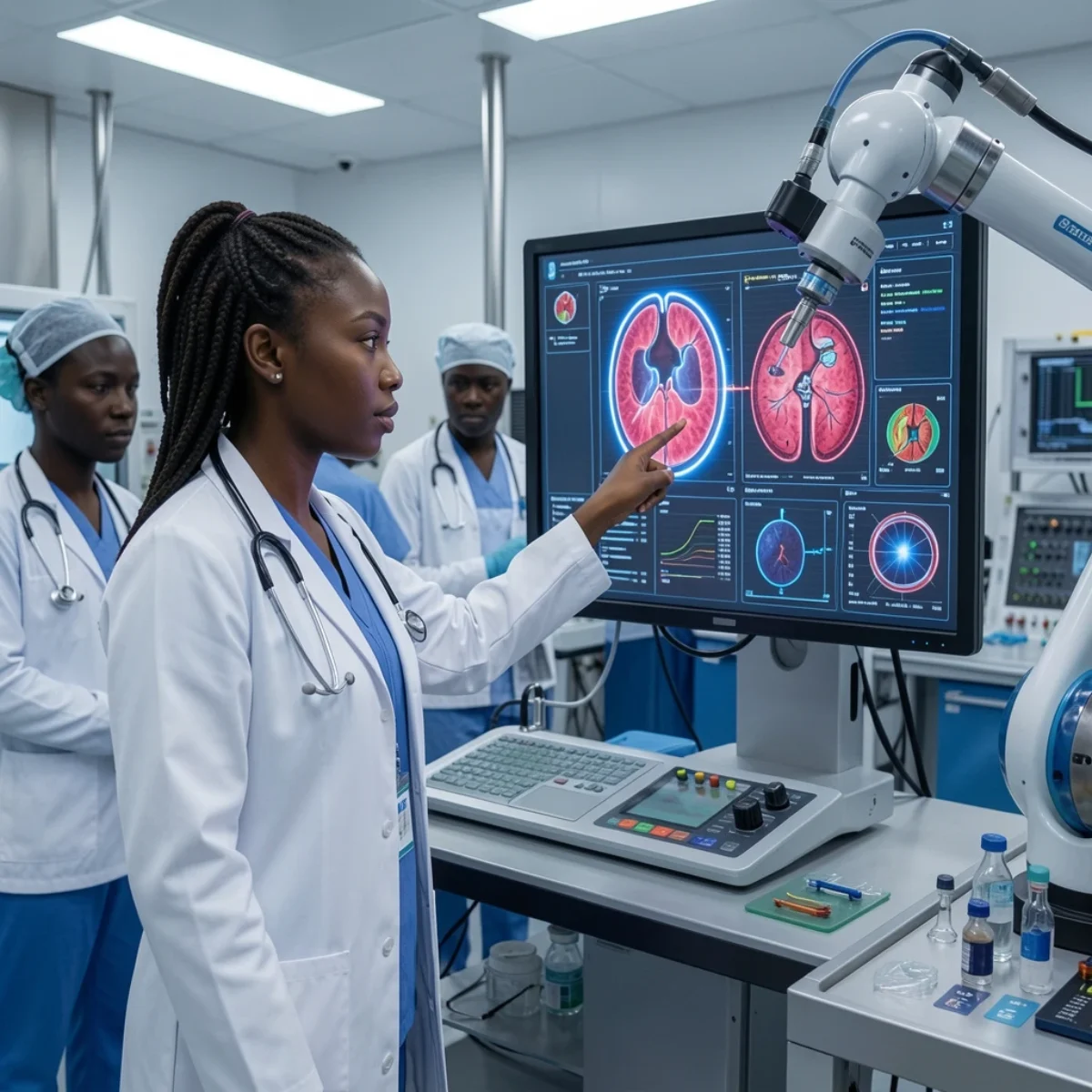
The UCSF team built a high-throughput robotic system that placed thousands of miniature tumors into 384-well plates inside controlled incubators. A robotic arm moved the plates between stations, while sound-wave technology delivered tiny, accurate doses of drugs. Other stations stained cells with antibodies and captured microscopic images so researchers could see which cancer cells survived and which weakened.

The result was striking: nine of the 94 tested drugs consistently weakened persister cells. That suggests these hidden cells may share common vulnerabilities, even when they emerge from different tumor samples or treatment conditions. This is important because oncology often treats every tumor as highly individualized. Precision medicine remains essential, but shared persister-cell weaknesses could help researchers design broader relapse-prevention strategies.


Why This Matters for the Global South

Cancer is rising rapidly across low- and middle-income regions. The WHO reported that global cancer cases are projected to reach more than 35 million by 2050, a 77% increase from 2022 estimates. In sub-Saharan Africa, IARC’s GLOBOCAN fact sheet estimated 848,311 new cancer cases and 559,083 cancer deaths in 2022.

This matters because late diagnosis, limited pathology capacity, high medicine costs, and shortage of oncology specialists make relapse especially difficult to manage. Technologies that help identify better drug combinations earlier could reduce trial-and-error treatment, improve survival, and support more efficient use of limited resources.

Robotic drug testing will not immediately appear in every hospital laboratory. However, regional research hubs, university labs, cancer institutes, biotech partnerships, and public-private consortia could use this type of platform to generate locally relevant evidence. Over time, that could help answer a critical question: which treatments work best for tumors seen in African populations and other underserved communities?


The Role of Governments, NGOs, and Commercial Innovators

Governments can support this field by funding cancer research infrastructure, biobanks, ethical data-sharing frameworks, and regulatory pathways for AI-enabled and automated drug-testing tools. National cancer plans should not focus only on treatment access; they should also invest in diagnostic innovation, clinical trials, and locally relevant research capacity.

NGOs and global health funders can help by supporting shared laboratory platforms that serve multiple countries or regions. Instead of every institution buying expensive equipment independently, funders could support regional centers of excellence where hospitals submit tumor samples for advanced testing, training, and collaborative research.

Commercial entities also have a major role. Robotics companies, biotech startups, pharmaceutical firms, cloud providers, and AI developers can partner with academic centers to reduce the cost of automated screening. The most valuable commercial models will not simply sell expensive machines; they will provide scalable workflows, training, maintenance, data governance, and affordable access models.


Practical Takeaways for Health Leaders

The key lesson is not that robots will replace cancer researchers or oncologists. The real opportunity is that automation can help scientists ask better questions at a scale that manual testing cannot match. Robots can run repetitive, precise, high-volume experiments; AI and imaging tools can help interpret results; clinicians can then decide how findings fit patient care.

For countries working to strengthen cancer services, this points to three priorities: invest in early detection, build research partnerships, and connect laboratory innovation with real clinical pathways. A robotic platform that identifies promising drug combinations is only useful if patients can access diagnosis, referral, treatment, monitoring, and follow-up.


Conclusion

Robots improve drug tests for catching lurking cancer cells by making cancer research faster, more systematic, and more reproducible. The UCSF study shows that robotic platforms can test thousands of mini-tumor experiments, identify shared weaknesses in persister cells, and accelerate the search for treatments that may reduce relapse.

For the Global South, the promise is especially important. As cancer cases rise, health systems need smarter tools that improve early detection, guide treatment decisions, and reduce the burden of recurrence. Robotic drug testing is still largely a research tool, but its direction is clear: the future of oncology will be built through human expertise, automated laboratories, AI-supported analysis, and a stronger commitment to equitable access.

Similar Posts

Skin Computer Patch AI The Wearable Technology That Could Save Lives

A skin-worn AI patch could detect health risks instantly, making remote monitoring faster, smarter, and more accessible.

AI in Drug Development: A New Era for Liver Safety Prediction

FDA review of an AI liver safety tool could help predict drug damage earlier and make medicine development safer.

Wearable Ultrasound: The Future of Continuous Pregnancy Monitoring

Wearable ultrasound could help monitor babies in the womb continuously, supporting earlier detection of pregnancy risks.

Bottom Image
