Notice: Test mode is enabled. While in test mode no live donations are processed.

$ 0
Select Payment Method
Apoio Healthbot

Blog Post

Compassion

Skin Computer Patch AI The Wearable Technology That Could Save Lives

“The future of healthcare may not just be in hospitals or apps — it may be quietly working on the skin, detecting risks before they become emergencies.”

Wearables have already changed how people understand their bodies. Smartwatches, fitness bands, glucose monitors, and portable ECG devices can measure heart rate, oxygen saturation, sleep, movement, and other health signals. But most of today’s devices still behave like data collectors: they sense information, then send it to a phone, cloud platform, or external processor for analysis.

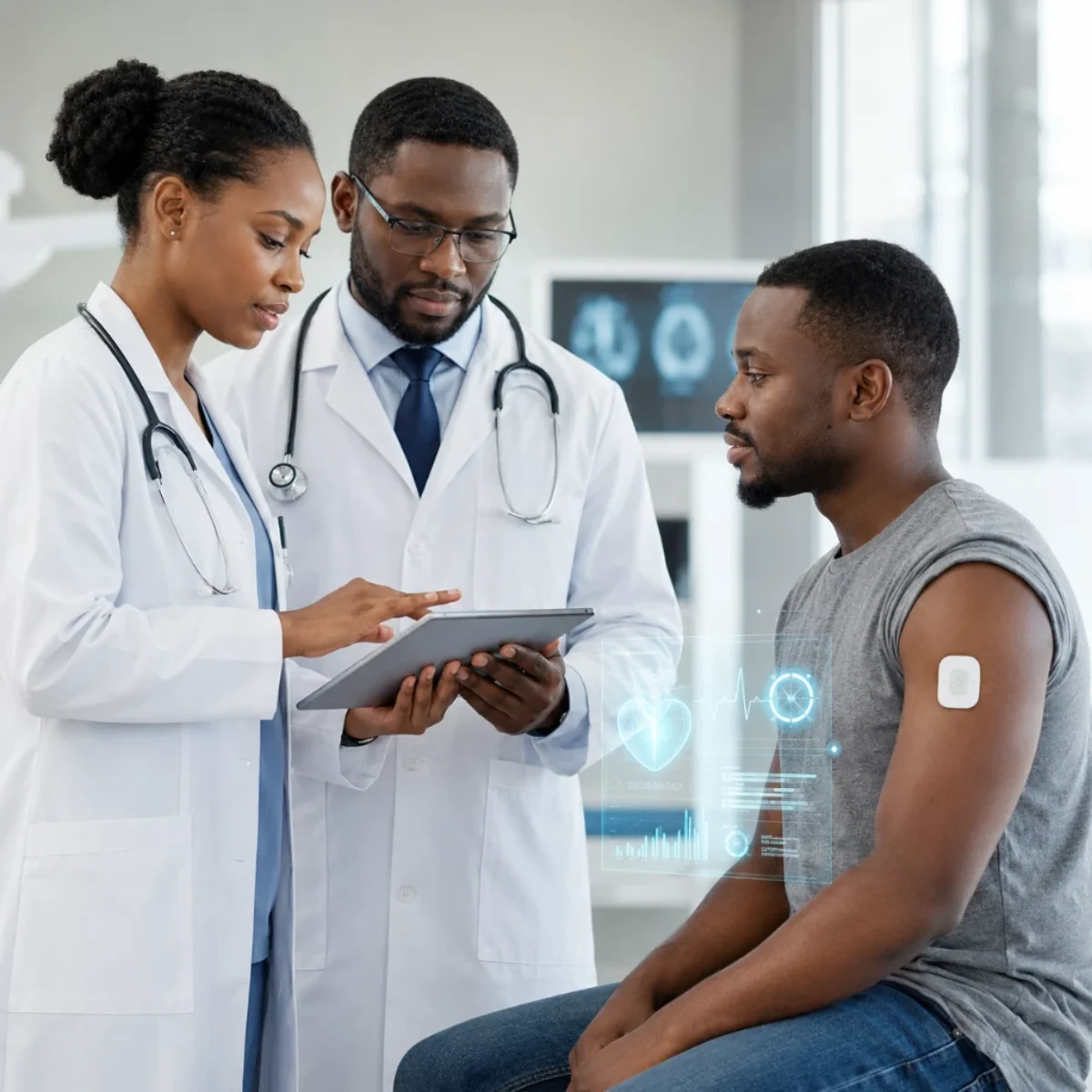
A new generation of skin computer patch AI could change that model completely. Researchers at the University of Chicago’s Pritzker School of Molecular Engineering have developed a soft, skin-mounted compute patch that can run AI models directly on the body rather than depending on a smartphone or cloud server. In a recent report, researcher Sihong Wang described the vision as a “personal, instantaneous doctor integrated into users’ devices.” The research, reported by [TechRadar], focuses on ultra-fast, on-body AI inference for high-stakes health monitoring, including dangerous heart rhythm patterns.


What makes the skin computer patch different?

Traditional wearables usually separate sensing from intelligence. A smartwatch may record an ECG or pulse signal, but deeper interpretation often happens elsewhere. The new patch moves computation closer to the biological signal. It combines sensing and AI processing in a soft, stretchable format designed to conform to the skin.

That matters because health data is often time-sensitive. In conditions such as ventricular fibrillation, delays of even a few seconds can be clinically important. By processing signals directly on the body, a patch could analyze abnormal patterns in milliseconds, reduce dependence on unstable connectivity, and lower the energy cost of sending continuous data to external devices. TechRadar reported that the patch achieved 99.6% accuracy in locating arrhythmia wavefront positions during tests involving a donated human heart.

The underlying engineering is also important. Conventional silicon chips are rigid, while the human body bends, stretches, sweats, and moves. The research uses stretchable transistors and materials designed for bio-integrated electronics. This connects to wider work in electronic skin, where researchers are exploring flexible devices that can sense, compute, and interact with the body more naturally. For broader context, readers can explore this review on [AI-enhanced electronic skins], which explains how electronic skin research is moving toward sensing, robotics, and intelligent health applications.


Why on-body AI could be life-saving

The most powerful promise of this technology is speed. In emergency medicine, remote monitoring, and chronic disease management, the value of data depends on how quickly it becomes actionable. A skin computer patch that detects risk locally could alert patients, caregivers, or clinicians before a crisis escalates.

For example, an AI-enabled cardiac patch could continuously monitor electrical signals and identify dangerous rhythm changes without waiting for cloud-based processing. In the future, similar on-body AI could support early warning for heart attacks, seizures, dehydration, respiratory distress, infection risk, or complications in pregnancy. This aligns with the broader shift from reactive healthcare to preventive, always-on monitoring.


Why this matters for the Global South

In Sub-Saharan Africa and other underserved regions, healthcare access is often limited by distance, cost, clinician shortages, diagnostic delays, and weak referral systems. A skin computer patch will not replace doctors, nurses, community health workers, or hospitals. But it could become a powerful support tool when integrated responsibly into care pathways.

The biggest opportunity is triage. A low-power patch that can detect concerning signs locally could help community health workers decide who needs urgent referral, who can be monitored safely, and who requires follow-up. This could be especially valuable in rural clinics where specialist cardiology, laboratory testing, or advanced imaging may not be available.


Privacy, connectivity, and trust

On-body AI has another important advantage: privacy. When sensitive health signals are processed locally, less raw data needs to leave the device. This could reduce exposure to cybersecurity risks and help patients retain more control over their health information.

Connectivity is equally important. Many digital health systems assume reliable internet access, but that is not always realistic. Edge AI can continue functioning when mobile networks are weak, expensive, or unavailable. This makes skin computer patch AI especially relevant for low-resource settings, disaster response, remote clinics, and mobile health programs.

Still, trust will be essential. Any medical patch using AI must be validated across diverse populations, skin tones, ages, body types, climates, and disease profiles. It must also be affordable, explainable to clinicians, and regulated carefully. The World Health Organization’s guidance on AI for health emphasizes that AI systems must be safe, ethical, equitable, and governed in ways that protect patients. That principle should guide every step from laboratory prototype to real-world deployment.


What still needs to happen before clinical use?

This technology is promising, but it is still early. Before it can be used widely, researchers and manufacturers will need to prove long-term safety, durability, accuracy, comfort, battery performance, data security, and clinical value. Regulators will also need evidence that the patch performs reliably outside controlled laboratory settings.


Conclusion

The phrase “a personal, instantaneous doctor” should not be taken literally. A skin computer patch cannot replace clinical judgment, diagnosis, emergency care, or human compassion. But it does capture an important future: healthcare intelligence is moving closer to the patient.

For health systems in the Global South, the most exciting possibility is not just smarter gadgets. It is earlier detection, faster triage, better remote monitoring, stronger privacy, and more resilient care in places where connectivity and specialist access are limited. Combined with community health workers, mobile health platforms, telemedicine, and responsible AI governance, skin computer patch AI could help turn everyday devices into life-saving health companions.

Similar Posts

AI in Drug Development: A New Era for Liver Safety Prediction

FDA review of an AI liver safety tool could help predict drug damage earlier and make medicine development safer.

Wearable Ultrasound: The Future of Continuous Pregnancy Monitoring

Wearable ultrasound could help monitor babies in the womb continuously, supporting earlier detection of pregnancy risks.

The Future of AI Health Coaching Is Already on Your Wrist

Fitbit is becoming Google Health, marking a major shift toward AI-powered coaching, wearable insights and preventive dig

Bottom Image