
Notice: Test mode is enabled. While in test mode no live donations are processed.

$ 0
Select Payment Method
Apoio Healthbot

Blog Post

Compassion

A Practical Model for TB Case Finding: AI Screening, Rapid Testing, and Patient Support

“When AI is built into the care pathway—not bolted on—it turns screening into faster treatment and real public-health impact.”

Haryana is taking a decisive step toward faster, earlier tuberculosis detection by rolling out an AI-driven screening model backed by a ₹20.5 crore partnership. By combining handheld digital chest X-ray systems with computer-aided detection and scaling up rapid molecular testing, the state is shifting from passive diagnosis to proactive case finding in high-risk communities. This approach matters beyond India: it offers a practical blueprint for health systems across the Global South, including Sub-Saharan Africa, that are looking to close diagnostic gaps, reduce delays to treatment, and use emerging technologies to extend scarce clinical capacity without compromising quality or equity.


Why this rollout matters right now

Tuberculosis remains one of the world’s most stubborn public-health threats, especially across low- and middle-income countries where diagnostics, radiology capacity, and last-mile care are stretched thin. The World Health Organization’s Global Tuberculosis Report 2025 details how progress depends on better screening, smarter targeting, and sustained financing, not just new tools.

Against that backdrop, Haryana’s newest move stands out because it treats AI as delivery infrastructure, not a shiny pilot. The state is shifting from passive detection to active screening by deploying AI-enabled handheld X-ray devices in 2,111 identified high-risk villages and urban wards, paired with a ₹20.5 crore collaboration with Bharat Petroleum Corporation Limited Foundation to strengthen diagnostics. [The Time of India]


What Haryana actually launched: a full case-finding and care stack

Haryana’s announcement during World TB Week is not just about one algorithm. It is an integrated approach combining community screening, rapid confirmation, mobile service delivery, and patient support:

  • AI-enabled handheld X-ray screening in 2,111 high-risk villages and wards to flag presumptive TB earlier, including among people who have not yet sought care.
  • 150 Truenat Quattro molecular diagnostic machines funded through the ₹20.5 crore partnership to expand rapid testing capacity closer to the community level and reduce delays between suspicion and confirmation.
  • 65 Mobile Medical Units and Ni-Kshay Vahans to bring diagnostics and services to remote areas.
  • A telemedicine center at the State TB Cell in Panchkula to support patients and frontline workers.
  • Program-strengthening measures like lab certification advances, treatment-outcome focus including death audits, and livelihood-linked reintegration support to reduce stigma and improve adherence.


This is what makes the rollout particularly relevant for Sub-Saharan Africa: it tackles the entire TB cascade, from finding cases to keeping people on treatment, using technology to extend scarce clinical capacity.


How AI-powered chest X-ray screening helps close the diagnostic gap

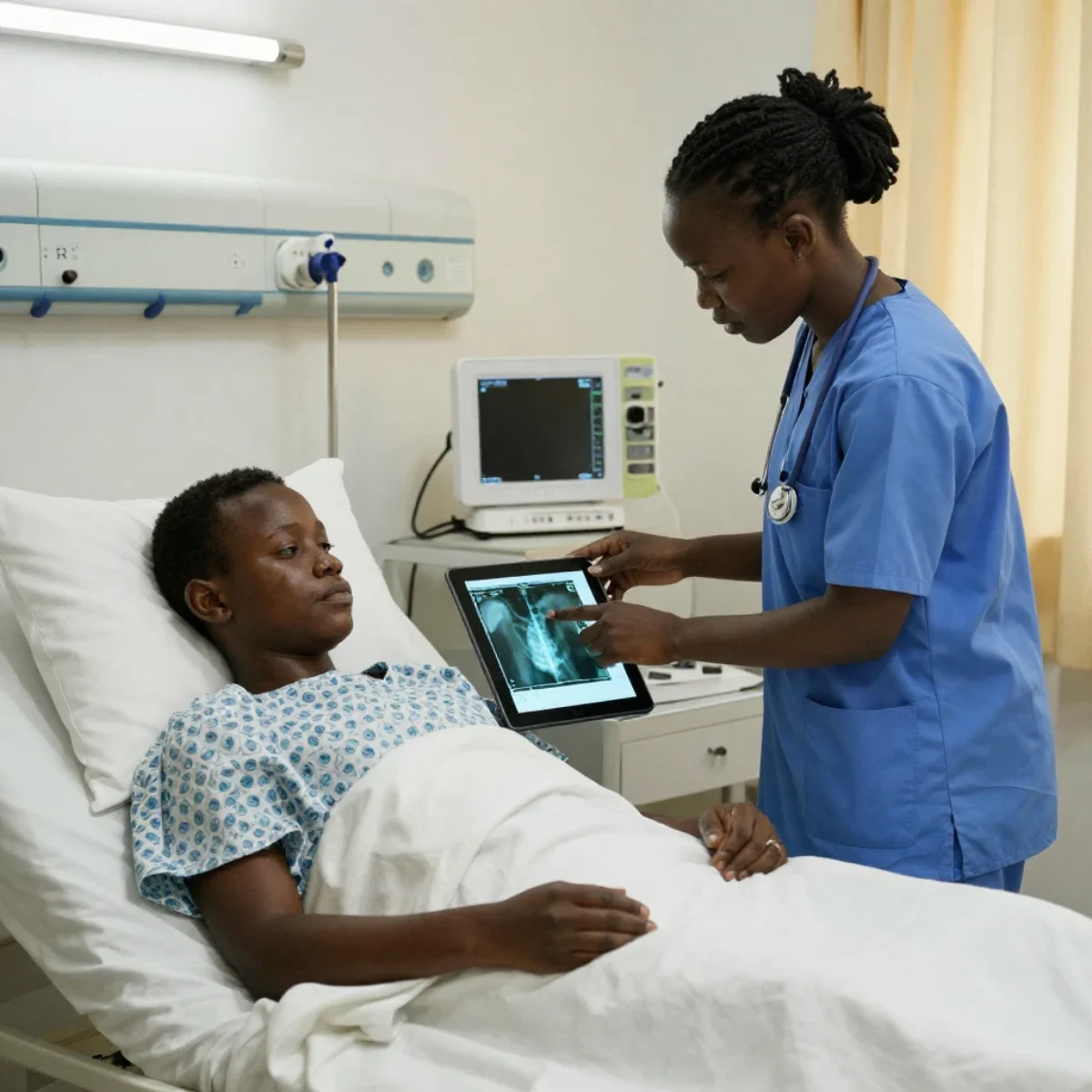
AI-based computer-aided detection for chest X-rays works as a rapid triage layer: it identifies abnormal patterns suggestive of TB and helps decide who should get confirmatory testing. WHO has recommended CAD for TB screening and triage among adults in appropriate settings, and continues to publish guidance as products evolve.

Two practical reasons CAD matters for last-mile healthcare:

  1. Speed and scalability: screening can be done in community settings without waiting for a radiologist in every location.
  2. Standardization: CAD can reduce variability in readings and make outreach programs easier to run at scale, provided thresholds are calibrated and quality is monitored.


For implementers, the most overlooked step is calibration. WHO’s dedicated toolkit on calibrating CAD score thresholds is worth bookmarking because it turns AI into an accountable public-health instrument rather than a black box.


The ₹20.5 crore tie-up: a financing model with Global South relevance

Haryana’s partnership with BPCL Foundation is a reminder that TB elimination is not only a health-ministry problem. It is a multisector problem that can benefit from blended financing, especially when budgets are tight and donor flows fluctuate.

This kind of corporate social responsibility-backed procurement can be adapted in African contexts where ministries are already working with:

  • Philanthropy and pooled procurement mechanisms
  • Global financing institutions
  • Private sector partners for devices, maintenance, and connectivity
  • NGOs for community mobilization and patient support


India’s national strategy also frames the urgency: the Government of India has publicly stated an end-TB ambition aligned to 2025 through its National Strategic Plan 2020 to 2025, emphasizing prevention, detection, and treatment strengthening.


Beyond detection: Haryana is also using AI for targeting and adherence

Screening alone does not end TB if patients fall out of care. Haryana has also been reported as deploying AI tools that analyze program data to identify higher-risk geographies and patients, including tools integrated with the national Ni-kshay platform to support targeting and adherence interventions.

This is the part that many tech-for-health projects miss in the Global South: finding cases is only half the battle. Keeping people on treatment, preventing drug resistance, and providing targeted social support is where outcomes are won.


FAQs
Is AI-based chest X-ray screening enough to diagnose TB?

No. AI-based CXR is typically used for screening and triage to decide who should receive confirmatory testing like molecular assays. WHO guidance supports CAD use in defined contexts, with proper calibration and quality assurance.

 
Why combine AI screening with Truenat machines?

Because the fastest path from suspicion to treatment is a tight loop: screen in the community, confirm quickly, and start care without long referrals. Haryana’s rollout explicitly pairs AI-enabled screening with expanded molecular testing capacity.


What is the biggest risk when deploying AI for TB in low-resource settings?

Treating AI as the solution rather than part of a system. Programs succeed when they fund training, calibration, maintenance, data governance, and adherence support alongside the algorithm.

If you want, I can also convert this into an SEO brief with suggested title tags, internal link anchors, and a snippet-ready key takeaways section for your CMS.


Conclusion

Haryana’s AI-driven TB detection rollout shows what it looks like when emerging technology is deployed as part of a complete public-health system rather than a standalone pilot. By pairing portable digital chest X-rays and computer-aided detection with expanded rapid molecular testing, mobile outreach, and patient support, the state is building a faster pathway from screening to confirmation to treatment. For health leaders and implementers across the Global South, including Sub-Saharan Africa, the key lesson is clear: impact comes from integration. When AI is calibrated, governed, and connected to reliable referral networks, laboratories, and adherence support, it can help find missed cases earlier, reduce transmission, and move countries closer to TB elimination while strengthening the foundations of primary healthcare.

Similar Posts

Dementia Care Meets Wearables How Prize Winning AI Smart Glasses Could Scale via Smartphones

AI smart glasses won a £1m dementia prize. Here’s how they guide daily tasks, what the evidence shows, and why it mat

Beyond Innovation: How to Deploy AI Breast Screening Tools Responsibly

AI plus thermal sensors, no radiation, wearable screening. Lord’s Mark and CMET aim to expand early breast cancer dete

Wearable Tech and AI in Healthcare: Building Trustworthy Evidence at Scale

Verily and Samsung are bringing Galaxy Watch data into clinical trials, enabling remote monitoring, real world evidence,

Bottom Image