Notice: Test mode is enabled. While in test mode no live donations are processed.

$ 0
Select Payment Method
Apoio Healthbot

Blog Post

Compassion

AI-Powered Healthcare: From Genomics to Digital Diagnostics

“The future of healthcare is not only smarter technology—it is using innovation to bring earlier, safer and more personalised care to everyone.”

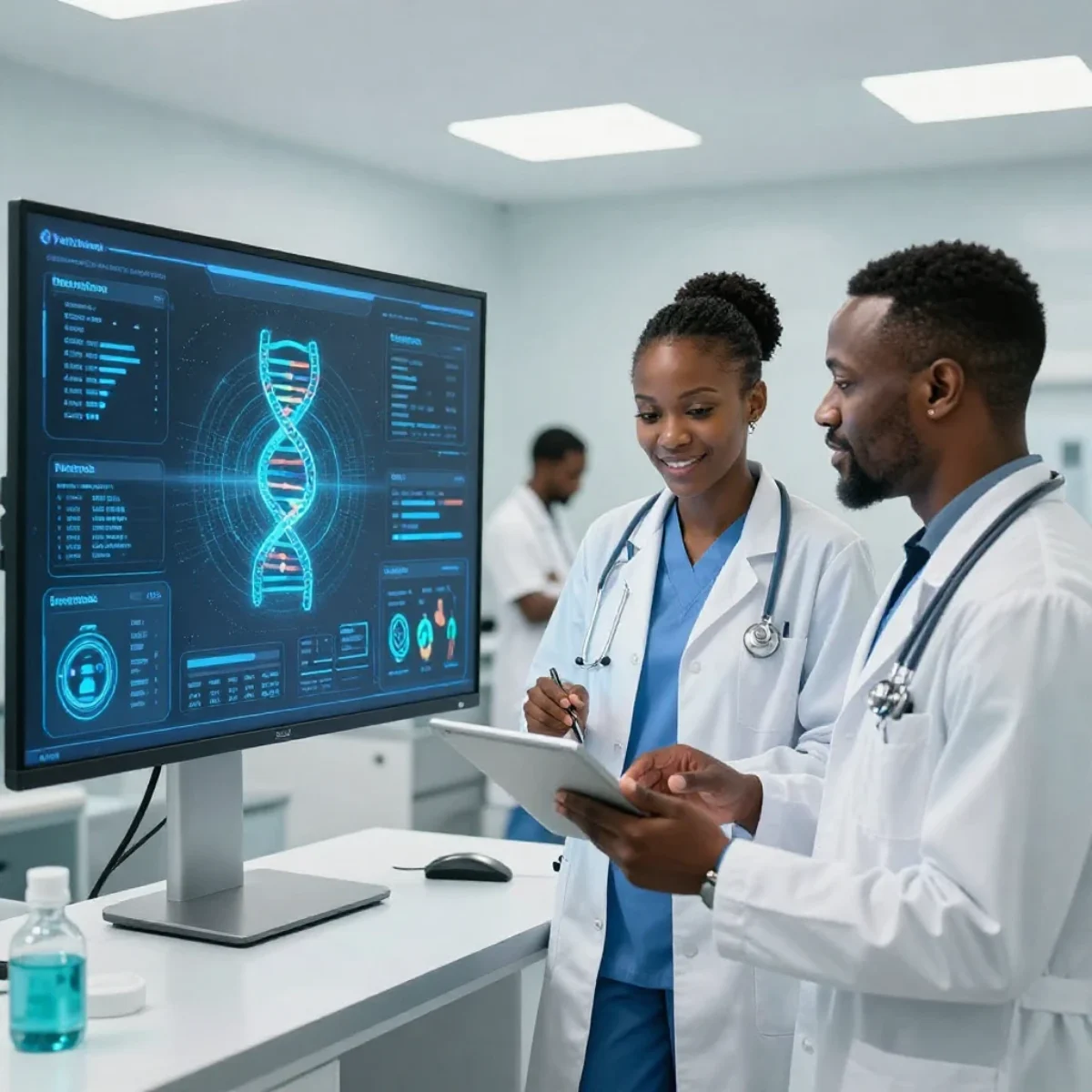
Healthcare is entering an era in which artificial intelligence, connected sensors, genomic science and immersive technology are beginning to work together. Instead of relying only on occasional hospital visits and treating illness after symptoms become severe, emerging systems aim to make healthcare more continuous, preventive, personalised and accessible.

This direction was highlighted at the Healthcare and Artificial Intelligence Conclave 2026 in Bengaluru, where innovators demonstrated AI-powered clinical assistants, virtual surgical training, smart yoga mats, personalised genomics, digital pathology and automated medical documentation. The central message was equally important: artificial intelligence should strengthen clinical judgement rather than replace qualified healthcare professionals. Readers can review the original. [timesofindia]

For health systems in Africa and other regions of the Global South, these innovations offer more than convenience. When responsibly deployed, they could help extend expertise to underserved communities, reduce pressure on scarce healthcare workers, improve preventive care and support earlier diagnosis.


AI Clinical Assistants: Giving Healthcare Workers Better Information

AI clinical assistants are among the most immediately useful healthcare innovations. These systems can analyse clinical records, laboratory results, symptoms, medication histories and monitoring data before presenting relevant information to a doctor or nurse.

Their value is not simply speed. A well-designed assistant can help healthcare workers identify information that might otherwise be overlooked, prepare draft clinical notes, organise patient histories and flag possible risks for professional review. At the Bengaluru conclave, an AI clinical agent was demonstrated analysing a full day of patient information and quickly generating dosage recommendations. Such demonstrations are promising, but any recommendation affecting treatment must still be reviewed by a qualified clinician.


Smart Yoga: Turning Preventive Wellness into Measurable Guidance

Smart yoga demonstrates how artificial intelligence can connect traditional wellness practices with modern sensor technology.

An AI-enabled yoga mat can use embedded sensors to measure balance, posture, weight distribution and alignment. A connected mobile application may then provide immediate feedback or recommend routines based on the user’s performance. At the 2026 conclave, the Yogifi smart mat was presented as an example of technology designed to provide personalised yoga guidance while monitoring movement in real time.

The broader opportunity is preventive healthcare. Physical inactivity, chronic stress, poor mobility and musculoskeletal pain contribute to long-term health problems. Sensor-supported exercise tools may help users practise more safely, maintain healthy routines and recognise changes in balance or movement earlier.

However, smart yoga products should not be presented as replacements for physiotherapists, doctors or qualified instructors. Posture feedback is not the same as a medical diagnosis, and an algorithm may not understand an individual’s injury, disability, pregnancy or underlying health condition.


Virtual Reality Is Creating Safer Surgical Training Environments

Surgical training traditionally depends on classroom teaching, observation, supervised procedures and access to specialist facilities. Virtual reality can add a repeatable simulation environment in which trainees practise procedures without putting patients at risk.

A trainee wearing a VR headset may rehearse the sequence of an operation, learn how to handle instruments, experience unusual complications and receive performance feedback. Procedures can be repeated until the learner demonstrates competence rather than being limited by the availability of operating rooms or suitable cases.

Evidence reviews have found support for immersive VR in surgical education, although results vary by procedure, equipment and training design. The technology is most effective when incorporated into a structured educational programme instead of being treated as a standalone gadget.


Digital Pathology Can Move Expertise Instead of Patients

Pathology is essential for diagnosing cancers, infections and other diseases, but many regions face serious shortages of trained pathologists. Digital pathology addresses this challenge by converting laboratory slides into high-resolution images that can be securely reviewed on a computer.

Once a slide is digitised, it can be sent to a specialist in another city or country. AI may also help prioritise suspicious images, identify regions that require closer inspection or support quality assurance. The final diagnosis must remain the responsibility of a qualified professional.

This model is particularly valuable where patients currently wait weeks for a specimen to be transported and reviewed. Instead of moving the patient or physical slide over long distances, a digital image can move through a secure network.


How Healthcare Organisations Should Approach These Innovations

The future of healthcare technology will be determined less by impressive demonstrations than by responsible implementation.

First, organisations should begin with a defined health-system problem. A smart device or AI model should address a genuine need such as delayed diagnosis, limited specialist access, documentation burden or poor continuity of care.

Second, tools must be co-designed with patients, healthcare workers and local institutions. Technology developed without understanding language, culture, infrastructure and clinical routines may create new work rather than improving care.

Third, local validation must happen before large-scale deployment. Accuracy reported in another country or hospital does not guarantee safe performance in a different population.

Fourth, health authorities need strong governance for consent, cybersecurity, accountability and data sovereignty. Patients should know what information is collected, where it is stored and how it may be used.

Finally, programmes should measure health outcomes rather than technology usage alone. The important questions are whether diagnosis became faster, complications decreased, clinicians gained time, patients travelled less and underserved communities received better care.


The Future of Healthcare Must Be Innovative and Inclusive

AI, smart yoga and genomics in healthcare represent different parts of the same transformation. AI clinical assistants can help healthcare workers process information. Smart wellness tools can encourage preventive behaviour. Genomics can make treatment more personalised. Virtual reality can expand professional training, while digital pathology can bring specialist expertise to facilities that previously lacked it.

None of these technologies is automatically equitable. Without affordable access, representative data, local capacity and effective regulation, innovation may reinforce existing inequalities.

The greater opportunity is to build systems in which technology extends human expertise rather than concentrating it. For the Global South, this means investing not only in algorithms and devices but also in healthcare workers, digital infrastructure, local research, community trust and long-term institutional capacity.

When those foundations are in place, emerging healthcare technologies can do more than make medicine smarter. They can help bring earlier, safer and more personalised care within reach of the people who need it most.

Similar Posts

AI in Drug Development: Faster Science, Fairer Healthcare Access

Anthropic’s move into drug discovery could reshape AI healthcare, neglected disease research, and access to medicines.

Robots, AI, and the Future of Cancer Relapse Prevention

Robotic drug testing helps scientists detect hidden cancer cells that survive treatment and may cause relapse.

Skin Computer Patch AI The Wearable Technology That Could Save Lives

A skin-worn AI patch could detect health risks instantly, making remote monitoring faster, smarter, and more accessible.

Bottom Image
