

Notice: Test mode is enabled. While in test mode no live donations are processed.

$ 0
Select Payment Method
Apoio Healthbot

Blog Post

Compassion

Artificial Neural Networks and the New Age of Equitable Healthcare Access

"From lab theories of the 1950s to today's clinics in Africa—artificial neural networks are proving that AI can bridge the healthcare divide."

Artificial Neural Networks (ANNs), inspired by the human brain’s architecture, have been a cornerstone of artificial intelligence since the 1950s. Initially conceptualized by pioneers like Frank Rosenblatt, who developed the perceptron model, ANNs faced limitations due to computational constraints and limited data availability. However, the advent of big data, enhanced computational power, and advanced algorithms has propelled ANNs into the forefront of healthcare innovation.


From Concept to Clinical Application

The integration of ANNs into healthcare began gaining traction in the 1990s, with significant advancements observed over the past two decades. These networks excel at identifying complex patterns within vast datasets, making them invaluable for medical diagnostics and treatment planning. For instance, ANNs have been employed to predict cancer risks, analyze medical images, and even assist in drug development. A notable example is the machine learning tool Sybil, which can predict lung cancer risk using a single low-radiation chest scan without additional clinical data. 


Transforming Healthcare in the Global South

In regions like Sub-Saharan Africa, where healthcare resources are often limited, ANNs offer transformative potential. By enabling remote diagnostics and personalized treatment plans, these networks can bridge the gap between urban medical centers and rural communities. Initiatives are underway to harness AI for improving healthcare delivery in these areas, focusing on scalable and sustainable solutions. [RamaOnHealthcare]


Funding and Collaborative Efforts

The surge in AI-driven healthcare solutions has attracted significant investment. In 2024 alone, nearly 30% of healthcare startup funding was directed toward companies leveraging AI technologies. Organizations like the National Institutes of Health (NIH) are also spearheading programs such as PRIMED-AI, aiming to integrate AI with clinical imaging and other health data to enhance decision-making processes. 


Challenges and Ethical Considerations

While the benefits of ANNs in healthcare are substantial, challenges remain. Ensuring data privacy, addressing algorithmic biases, and establishing regulatory frameworks are critical to the responsible deployment of AI in medicine. Moreover, the success of these technologies hinges on their adaptability to diverse healthcare systems and cultural contexts.


Conclusion

From their inception in the mid-20th century to their current applications in modern medicine, Artificial Neural Networks have evolved into powerful tools for enhancing healthcare outcomes. Their ability to process and analyze complex data sets positions them as key players in the ongoing effort to make healthcare more accessible and effective, particularly in underserved regions.

Similar Posts

How Doctors Can Lead the Next Era of AI-Powered Healthcare

AMA and DiMe define five key physician responsibilities for the AI era, offering a roadmap for safer, more human and acc
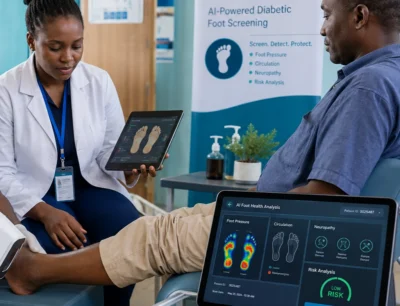

AI Is Bringing Earlier Diabetic Foot Detection Closer to Patients

Ayati Devices raises INR 15 crore to scale AI-powered diabetic foot diagnostics, supporting earlier detection and more a

AI-Powered Clinical Trial Simulations Gain $45M Boost

QuantHealth raises $45M to expand AI-powered clinical trial simulations, supporting faster drug development and more inc

Bottom Image
