Notice: Test mode is enabled. While in test mode no live donations are processed.

$ 0
Select Payment Method
Apoio Healthbot

Blog Post

Compassion

AI in Drug Development: A New Era for Liver Safety Prediction

“AI is moving drug safety from reactive testing to earlier risk prediction, helping researchers identify potential liver damage before human trials begin.”

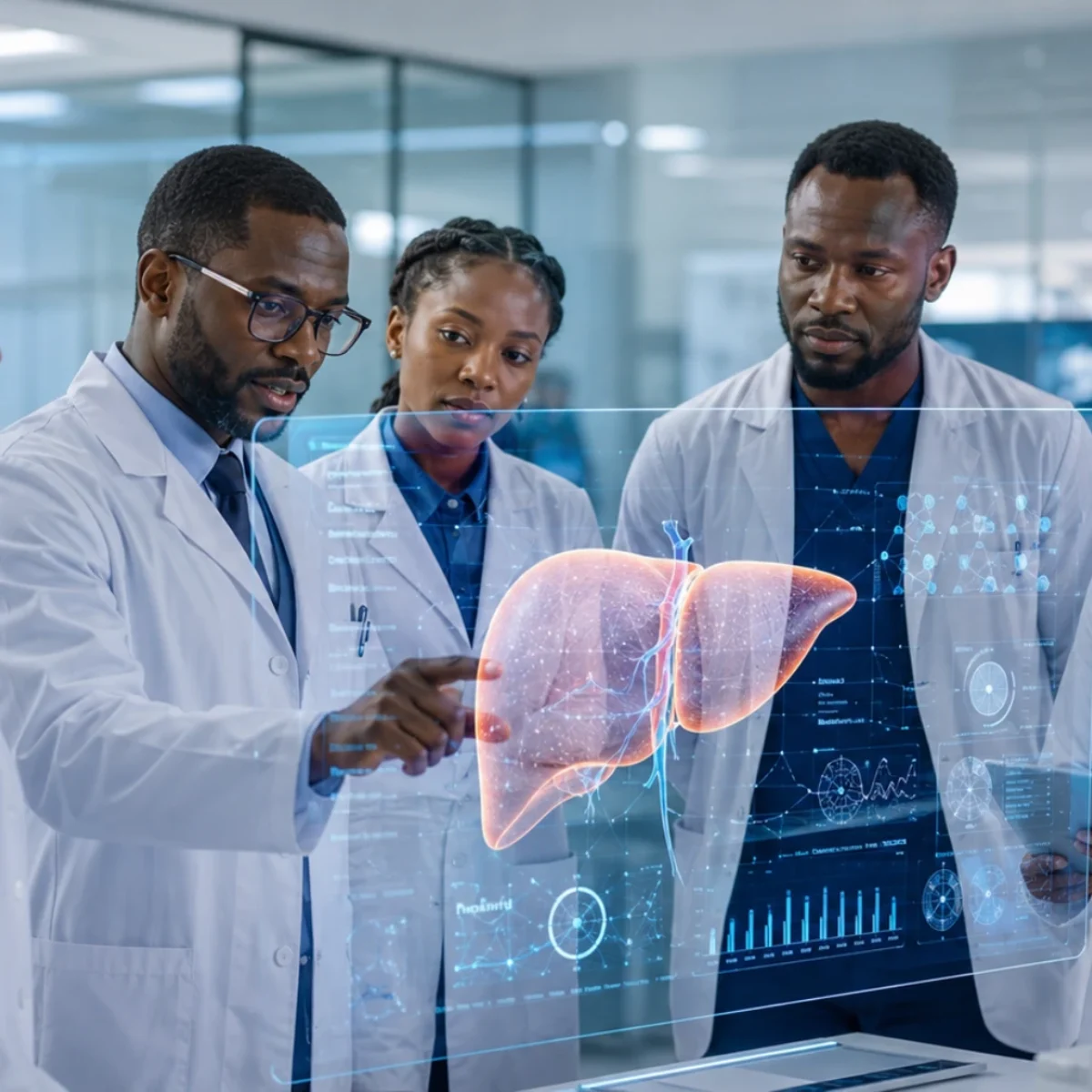
As artificial intelligence becomes a powerful force in healthcare innovation, its role in drug development is moving from possibility to practical impact. One of the most promising areas is liver safety prediction, where AI can help researchers identify potential risks earlier in the development process.

Drug-related liver damage remains one of the biggest challenges in bringing new medicines to patients. A treatment may look promising in early research, but hidden liver toxicity can delay trials, increase costs, or stop development altogether. AI-powered liver safety tools could change that by analysing patterns in chemical structures, historical drug data, and biological signals to predict possible harm before human trials begin.

This marks a new era for drug safety: one where smarter digital models support better decisions, safer clinical research, and more efficient medicine development.


A major regulatory signal for AI in drug safety

The US Food and Drug Administration has taken an important step toward bringing artificial intelligence deeper into drug development. According to Reuters, the FDA’s Center for Drug Evaluation and Research has accepted a letter of intent for an AI-based drug development tool designed to help predict drug-induced liver injury, also known as DILI. The tool is an AI-driven digital liver model that aims to assess the risk of liver toxicity in new small-molecule drug candidates before they enter human trials. [Reuters]

This matters because drug-related liver damage remains one of the most difficult safety risks to predict. A promising medicine may appear safe in early laboratory or animal studies, only to fail later because it causes liver injury in humans. The FDA says DILI is a leading safety concern in drug development and a major cause of clinical trial termination and drug attrition during the Investigational New Drug process.


How the AI liver model works

The tool accepted into the FDA’s ISTAND program is described as an AI-Driven Digital Liver Model for Prediction of Drug-Induced Liver Injury. Rather than relying only on traditional toxicology tests, the model compares the chemical structure of a new drug candidate with historical reference drugs that have known liver safety profiles. In simple terms, it looks for patterns: does this new molecule resemble compounds that previously showed liver toxicity, or does it align more closely with medicines that have demonstrated safer profiles?

The FDA emphasizes that this model would not replace all existing safety methods. Instead, it is intended to complement other forms of evidence as part of a weight-of-evidence approach. That distinction is important. AI in drug safety is most valuable when it helps scientists see risk earlier, prioritize better experiments, and make more informed decisions—not when it is treated as a black-box substitute for clinical judgment.


Why drug-induced liver injury is such a hard problem

The liver is the body’s central processing hub for many medicines. It metabolizes drugs, breaks down chemicals, and helps clear compounds from the bloodstream. But that also makes it vulnerable. Some drug candidates produce toxic metabolites, trigger immune reactions, or stress liver cells in ways that may not appear clearly in early testing.

A peer-reviewed review on the promise of AI for DILI prediction notes that machine learning methods can analyze chemical structures and predict some toxicity-related properties, but also highlights a key challenge: high-quality DILI data remains limited. This is why FDA review is so significant. Regulatory evaluation can help determine whether an AI model is robust, explainable, and useful enough for real-world drug development decisions.


Why the FDA’s ISTAND pathway matters

The tool has entered the FDA’s Innovative Science and Technology Approaches for New Drugs, or ISTAND, Drug Development Tool Qualification Program. FDA says the letter of intent is only the first step in a three-stage qualification process. The developer must next submit a qualification plan, followed by a full qualification package. If the model is eventually qualified, pharmaceutical sponsors may be able to use it within a defined context of use in drug development programs.

That context is crucial. A qualified tool is not a blanket approval for every possible use. It means the model has been evaluated for a specific purpose, such as supporting DILI risk assessment for small-molecule drug candidates before Phase I clinical trials.


Potential benefits: safer trials, faster decisions, fewer animal studies

The potential benefits are substantial.

First, an AI-based tool to predict drug-related liver damage could help companies identify risky compounds earlier. That may prevent unsafe molecules from advancing into costly and risky human studies.

Second, it could improve clinical trial design. If a candidate has a potential liver safety signal, sponsors can monitor specific biomarkers more carefully, adjust dosing strategies, or decide not to proceed.

Third, it supports the FDA’s broader interest in new approach methodologies that can reduce, replace, or refine animal testing. The FDA specifically says this digital liver model aligns with efforts to minimize animal use in nonclinical drug development.

This regulatory direction also fits a wider trend: AI is becoming part of the scientific infrastructure of drug development. The FDA has already discussed AI tools for internal review workflows, including Elsa, a generative AI tool designed to support scientific reviews, summarize adverse events, and compare labeling information.


What this means for pharmaceutical companies and biotech innovators

For pharmaceutical and biotech teams, the message is clear: AI models that are scientifically validated, transparent, and aligned with regulatory expectations may become increasingly important in preclinical development.

However, developers will need to prove that these tools are reliable across diverse chemical classes, not just in narrow retrospective datasets. They will also need to show how predictions are generated, where uncertainty exists, and how outputs should be interpreted by toxicologists and regulatory teams.

Explainability is becoming especially important. A 2026 preprint on DILI prediction argues that liver injury prediction should move beyond simple “toxic or not toxic” classification and toward mechanistic hypothesis generation, where models explain why a compound may be risky.


Conclusion

The FDA’s review of an AI-based tool to predict drug-related liver damage is more than a single regulatory milestone. It signals a future where drug safety assessment becomes more predictive, data-driven, and human-relevant. The promise is not that AI will eliminate uncertainty from medicine development. The promise is that it can help scientists ask better questions earlier, detect risk sooner, and design safer development pathways before patients are exposed to avoidable harm.

For healthcare innovators, this is a timely reminder: the next wave of medical progress will not come only from discovering new molecules. It will also come from building better systems to evaluate them.

Similar Posts

Wearable Ultrasound: The Future of Continuous Pregnancy Monitoring

Wearable ultrasound could help monitor babies in the womb continuously, supporting earlier detection of pregnancy risks.

The Future of AI Health Coaching Is Already on Your Wrist

Fitbit is becoming Google Health, marking a major shift toward AI-powered coaching, wearable insights and preventive dig

Using AI to Support Nurses and Strengthen Healthcare Access

Abridge’s ambient AI helps nurses reduce documentation time and focus more on patient care.

Bottom Image