
Notice: Test mode is enabled. While in test mode no live donations are processed.

$ 0
Select Payment Method
Apoio Healthbot

Blog Post

Compassion

The Future of AI Health Coaching Is Already on Your Wrist

“Google Health is more than a rebrand — it is a sign that wearable technology is moving from fitness tracking to everyday healthcare support.”

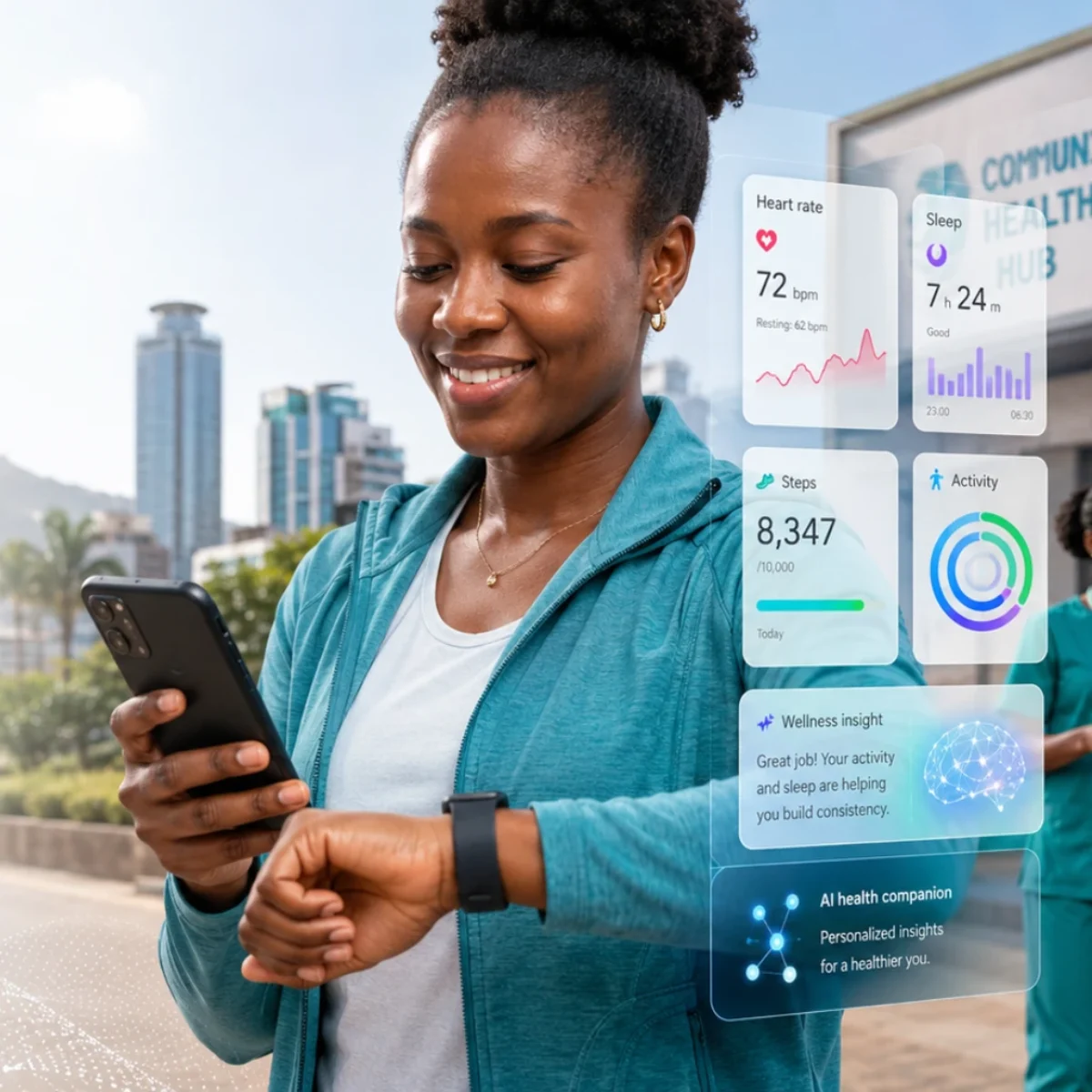
Artificial intelligence is beginning to change the way people understand and manage their health. With wearable devices now tracking sleep, heart rate, activity levels and daily wellness patterns, the next step is no longer just collecting data — it is turning that data into useful, personalised guidance. AI health coaching is emerging as a powerful tool that can help people make better everyday health decisions, detect patterns earlier and take a more proactive approach to wellbeing.

This shift is especially important for communities where access to healthcare is limited. A smartwatch or fitness tracker may not replace a doctor, but when combined with AI-driven insights, it can support prevention, remote monitoring and healthier habits. The future of healthcare is becoming more personal, more connected and, increasingly, already on your wrist.


What Is Changing: Fitbit Becomes Google Health

The core change is simple: the Fitbit app is being rebranded as Google Health. According to WIRED’s detailed report, existing Fitbit app users will receive an app update, while Google Fit is expected to be retired later in 2026, with migration details for Google Fit users coming later. [WIRED]

This matters because Google has historically had multiple health-related products: Fitbit for wearables and fitness tracking, Google Fit for Android health activity, Health Connect for data sharing, and Pixel Watch integrations. The Google Health rebrand appears to bring these strands into one clearer consumer-facing platform.

The move also supports a bigger market trend: health apps are no longer just step counters. They are becoming personal health dashboards, coaching systems, and data bridges between users, devices, apps, and potentially healthcare providers.


AI Health Coach: From Tracking to Personalized Guidance

One of the most important parts of the rebrand is the Google Health Coach, an AI-powered assistant built with Gemini. Google says Google Health Premium subscribers in supported countries will receive access to the coach, which provides personal and adaptive guidance across sleep, fitness, and health.

This is where the story becomes especially relevant for healthcare access. Traditional wearable apps often show users data but leave them to interpret it alone. AI coaching can help translate that data into simpler, more actionable recommendations. For example, instead of only showing sleep duration, an AI coach could explain how stress, activity, or routines may be affecting rest and recovery.

For underserved regions, AI coaching could eventually support behavior change at scale. In places where clinicians are overburdened, digital coaching may help people manage lifestyle risks linked to hypertension, diabetes, obesity, sleep disorders, and cardiovascular disease. However, it must be designed carefully, localized, and connected to real care pathways.


Google Fit Shutdown and Data Migration: Why Users Should Pay Attention

A major related change is the future of Google Fit. 9to5Google reports that Google Fit will shut down in favor of Google Health, and that Google plans to invite Google Fit users to migrate their data into the Google Health app later in 2026. [9to5google]

For users, the practical message is clear: health data continuity matters. Fitness history, sleep trends, heart rate patterns, weight records, and activity data become more valuable over time. Losing that history could weaken personal insights and reduce the usefulness of future AI recommendations.

This is especially important for people who use wearables to track long-term conditions or lifestyle improvements. Health data should not be treated as disposable app content; it is part of a person’s health story.


Privacy, Trust, and Health Data Governance

Whenever a major technology company expands its role in health, privacy becomes central. The rebrand raises important questions: Who controls the data? How is it used? Can users understand consent? Will sensitive health information remain separate from advertising systems?

WIRED reports that Fitbit user data remains siloed from Google Ads under commitments connected to the original Fitbit acquisition. Still, public trust will depend on how clearly Google explains permissions, data migration, AI coaching limits, and third-party integrations.

This is particularly important for Africa and the Global South. Digital health tools must respect local regulations, data sovereignty, informed consent, and cultural context. If wearable health platforms expand into emerging markets, governments and NGOs should insist on transparent privacy rules, strong cybersecurity, and user control.


Why This Matters for Healthcare in the Global South

The Google Health rebrand could influence the future of healthcare access in several ways.

First, it normalizes preventive digital health. In many low-resource settings, people reach healthcare systems late, when disease has already progressed. Wearables and AI coaching can support earlier awareness of sleep problems, inactivity, stress, and cardiovascular risk.

Second, it strengthens the role of remote monitoring. A unified health app connected to wearables can help users track health outside clinics. In regions where travel distance, cost, and clinician shortages limit care access, remote signals can support triage, follow-up, and community health programs.

Fourth, it shows how AI health tools are becoming mainstream. That matters for health ministries, NGOs, donors, and innovators building digital health platforms in Africa. Consumer platforms like Google Health may shape expectations around usability, personalization, and health data portability.


The Risks: Digital Divide, Accuracy, and Over-Reliance

Despite the promise, Google Health also highlights important risks.

Wearables can widen inequality if only wealthier users can afford compatible devices or subscriptions. Google Health Premium features, including deeper AI coaching, may be valuable but could remain out of reach for many users if pricing is not adapted for lower-income markets.

AI guidance also needs guardrails. A health coach can support motivation and education, but it should not replace medical diagnosis, clinical judgment, or emergency care. This is particularly important in settings where users may have limited access to doctors and may over-rely on app-based recommendations.

There is also the issue of data quality. Wearable sensors can be useful, but they vary by device, skin tone, placement, user behavior, and validation standards. For public health programs, consumer-grade data should be tested carefully before being used for clinical decisions.


Conclusion: Google Health Is Bigger Than a Rebrand

Google is rebranding the Fitbit app to Google Health, but the deeper story is the convergence of wearables, AI assistants, health data platforms, and preventive care. For consumers, this may mean better dashboards, smarter insights, and more personalized guidance. For health systems, especially in the Global South, it points toward a future where everyday devices could support earlier intervention, remote care, and more inclusive research.

Similar Posts

Using AI to Support Nurses and Strengthen Healthcare Access

Abridge’s ambient AI helps nurses reduce documentation time and focus more on patient care.

Human + AI Teamwork in Radiology: Clinical Trial Shows Better Lung Nodule Calls

DeepFAN AI, tested in a clinical trial, boosts lung nodule malignancy assessment—improving accuracy and consistency fo

Inside the New Wave of AI Powered Biotech Research Tools

Amazon Bio Discovery pairs agentic AI with lab partners to speed early drug discovery and could reshape how faster, fair

Bottom Image