Notice: Test mode is enabled. While in test mode no live donations are processed.

$ 0
Select Payment Method
Apoio Healthbot

Blog Post

Compassion

Wearable Tech and AI in Healthcare: Building Trustworthy Evidence at Scale

“Smartwatch data is no longer just for fitness dashboards. It is becoming a bridge between everyday life and clinical evidence.”

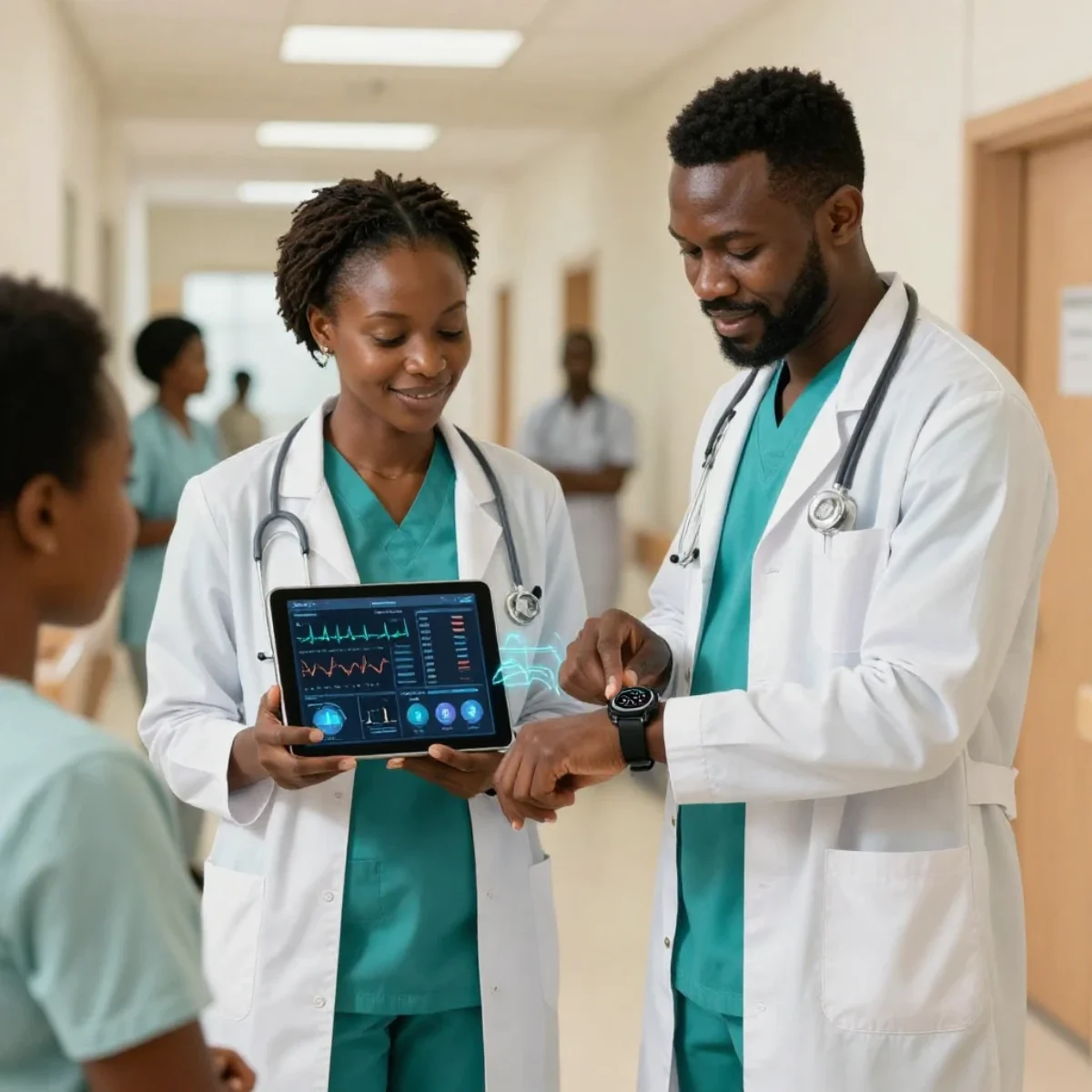
Verily and Samsung have announced a collaboration to bring smartwatch data into clinical trials at scale, integrating Samsung Galaxy Watch signals into Verily’s precision health platform, Pre. This partnership reflects a broader shift toward more participant friendly, real world research models that can capture continuous health data beyond clinic visits. By improving remote monitoring, supporting richer evidence generation, and strengthening trial operations and compliance workflows, smartwatch enabled studies can become faster, more inclusive, and more representative. For health systems across the Global South, this evolution is especially relevant because it can reduce travel burdens, lower participation barriers, and help expand research access in settings where clinical trial infrastructure is limited.


What Verily and Samsung are actually building

The headline is simple: sensor data from Samsung Galaxy Watch devices will be fully integrated into Verily’s platform and surfaced inside Viewpoint Evidence, Verily’s research solution suite built on Pre. [Verily]

The details are what make it interesting for clinical research teams:

  • Data harmonization and analytics tools: Verily points sponsors to Refinery for data harmonization and Workbench for analysis, modeling, and activation.

  • A longitudinal participant dataset and re contactable cohorts: The collaboration is positioned to give research customers access to consented participants whose smartwatch data can be combined with medical records, surveys, and third party data at the individual level.

  • Participant recruitment and engagement: Verily states it will recruit and engage Samsung users for research participation to support consistent use and data capture quality.

  • Clinical trial support beyond software: Verily also highlights regulatory, operational, development, and compliance support, which is often the missing piece when pilots try to become scalable trials.

Samsung’s role is not just hardware supply. Galaxy Watch health measures and features have verification and FDA related clearances in specific areas, including a sleep apnea risk feature and irregular heart rhythm notifications, which strengthens the case for research use when combined with proper validation and protocols.


Why smartwatch data is becoming trial grade evidence

Traditional clinical trials still suffer from three structural problems: recruitment friction, limited snapshots of health between visits, and under representation of the populations most affected by disease burden.

Continuous wearable sensing helps address all three by capturing sleep, activity, heart related measures, and other signals as people go about their normal lives. Coverage of this deal emphasizes the practical goal: enabling life sciences and government researchers to monitor participants remotely and generate real world evidence faster. [MobiHealthNews]

Regulators are also catching up. The US FDA has issued guidance specifically for digital health technologies used for remote data acquisition in clinical investigations, emphasizing selection, verification and validation, and data integrity expectations. International guidance is evolving too, with ICH E6 R3 explicitly acknowledging that digital health technologies such as wearables may expand trial approaches when fit for purpose.

In other words, the Verily Samsung announcement is landing at a moment when the compliance conversation is moving from whether wearables belong in trials to how to use them responsibly.


What this could mean for Sub Saharan Africa and the wider Global South

For many countries in Sub Saharan Africa, the biggest barriers to research participation are not willingness or clinical need. They are distance, cost, time off work, and limited site capacity. Bringing validated smartwatch endpoints into hybrid and decentralized trial designs can reduce the number of in person touchpoints and open participation to people who are currently excluded by geography.

That matters because access to trials is access to earlier diagnosis, better follow up, and sometimes access to therapies before they are widely available. On APOIO, we have already outlined how AI powered clinical trials can reduce bottlenecks, shorten timelines, and expand participation in underserved settings. The Verily Samsung approach complements that story by improving what gets measured between clinic visits.

This also aligns with the World Health Organization’s push for stronger digital health strategies that support equitable access and better system performance.


Where governments, NGOs, and commercial partners can act now

If you work in health ministries, donor funded programs, ethics boards, or digital health companies across Africa, the most practical takeaway is this: wearables become valuable when they are paired with governance, study design, and workflows, not when they are treated as gadgets.

Here are actionable pathways that fit Global South realities:


1. Build country led real world evidence cohorts

Verily highlights longitudinal datasets and re contactable participants as a core value proposition. Governments can pursue similar models locally, starting with priority conditions like hypertension, diabetes, maternal health, and respiratory disease, then linking data to care pathways.


2. Fund the boring but essential infrastructure

Data harmonization and secure analytics environments are called out explicitly in this partnership. Donors and implementers should budget for connectivity, device logistics, training, and data quality monitoring, not only model development.


3. Use emerging funding to de risk implementation

A current example is Horizon 1000, a Gates Foundation and OpenAI effort to support AI deployment across 1,000 primary healthcare clinics starting in Rwanda, backed by a 50 million dollar commitment and public reporting. Programs like this can create the policy capacity and technical backbone that also benefits digital trials and wearable enabled research.


Risks to manage so wearable trials do not widen inequity

Wearables do not automatically produce better science. A major risk in remote and virtual trials is data validity, including authentication challenges and ensuring the right person is generating the data. Research in NPJ Digital Medicine has highlighted issues like device sharing and other threats to validity in virtual trial contexts.

For the Global South, add two more realities:

  • Access bias: if only higher income participants have compatible devices, the dataset can skew away from those with the greatest unmet need

  • Data sovereignty and consent: cross border data handling must be clear, lawful, and understandable to participants, especially when consumer devices are involved

The partnership’s emphasis on regulatory support, harmonization, and participant engagement suggests the companies understand these risks, but local implementers still need strong oversight. 


Conclusion

Verily and Samsung’s collaboration signals a practical step toward modern clinical trials that are more continuous, more participant friendly, and better aligned with real life. By integrating smartwatch data into research grade workflows, the partnership can strengthen evidence generation, improve remote follow up, and help studies reach people who are often excluded by distance, cost, or limited site capacity. For the Global South, the biggest opportunity is to pair these tools with strong governance, fit for purpose validation, and equitable access strategies so that wearable enabled research expands participation and accelerates health impact rather than widening gaps.

Similar Posts

The Growing Role of AI Assistants in Healthcare Access

Amazon’s new healthcare AI assistant could reshape how people access health information, navigate care, and engage wit
AI Agents in Healthcare: Streamlining Notes, Claims, and Operations at Scale

Oracle Health is embedding AI into everyday workflows to cut admin burden, speed reimbursements, and give clinicians mor

Safer AI, Stronger Clinics: Turning Fundamental Research into Better Patient Outcomes

UK’s £40M frontier AI lab aims for safer, more reliable models. Here’s what it means for healthcare innovation and

Bottom Image
