
Notice: Test mode is enabled. While in test mode no live donations are processed.

$ 0
Select Payment Method
Apoio Healthbot

Blog Post

Compassion

The Future of Respiratory Screening May Fit in Your Pocket

“Cough-based screening on a smartphone could help primary care teams identify COPD risk earlier and prioritize referrals when spirometry is scarce.”

Chronic Obstructive Pulmonary Disease (COPD) remains one of the most underdiagnosed noncommunicable diseases in primary care, particularly in low-resource settings where access to spirometry and trained respiratory specialists is limited. As a result, many patients live with progressive breathlessness and chronic cough for years before receiving an accurate diagnosis—often presenting only when symptoms have become severe and harder to manage.

Emerging AI tools are beginning to change this dynamic by bringing screening capabilities closer to the point of care. One promising development is an AI-powered smartphone application that analyzes cough sounds to flag potential respiratory abnormalities. An AIIMS-led study suggests this approach could help close COPD diagnostic gaps by enabling rapid, scalable triage in primary care clinics—supporting earlier referral, timely treatment, and more efficient use of limited diagnostic resources.


What AIIMS found: a “cough-to-screening” pathway for COPD

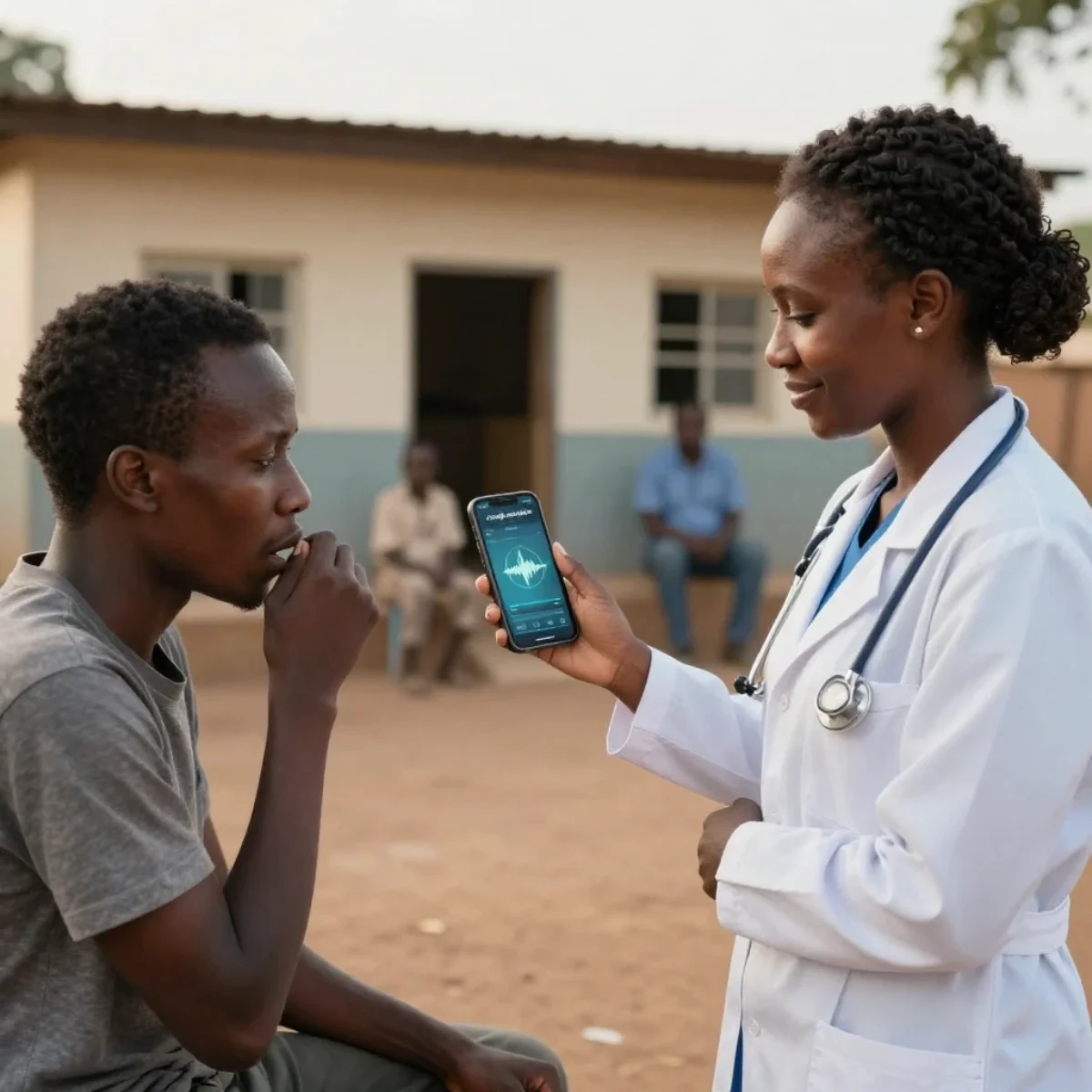
The reported workflow is straightforward: a patient coughs into a smartphone; the microphone captures the sound; embedded AI analyzes patterns and outputs a result within minutes. Compared against spirometry, the tool showed strong utility—particularly for identifying abnormal lung function and flagging conditions like COPD and asthma. [The Times of India]

This matters because COPD is frequently missed in primary care when clinicians are forced to rely on symptoms alone. A cough-based AI screen is not meant to replace spirometry in referral hospitals—but it can create a practical “first filter,” helping primary care teams decide who should be referred for confirmatory testing and treatment escalation.


Why this is especially relevant to Sub-Saharan Africa

Across Sub-Saharan Africa, diagnostic gaps are driven by familiar constraints: limited equipment, long travel distances to district hospitals, staff shortages, and late presentation. COPD risk factors (tobacco, air pollution, occupational exposures, and household air pollution from biomass fuels) persist in many settings—making earlier detection a public health priority.

A cough-based screening tool fits the infrastructure reality of many countries because it leverages something that is already widespread: mobile devices. For programs building “digital primary care,” the logic is compelling: deploy low-cost triage tools to community health workers and nurses, reserve referrals for higher-risk patients, and reduce missed disease.


Governments, NGOs, and the private sector: what “scale” could look like

Government agencies can use tools like this to strengthen primary care screening protocols (especially where national NCD strategies already target respiratory disease). In India, AIIMS clinicians reportedly suggested deployment in primary and secondary facilities where spirometry is unavailable, including community-level health centers.
In African contexts, similar pathways could be embedded into PHC strengthening programs—for example, NCD screening days, outpatient triage, and community outreach.

NGOs and implementers can support adoption by funding supervised pilots, training frontline staff, ensuring referral pathways exist, and measuring real-world impact (false positives, follow-up completion, and treatment initiation). Tools like this fail when “screening” isn’t connected to care.

Commercial entities and startups play the critical role of productizing the model: offline-first performance, multilingual UX, device variability testing, and regulatory-quality monitoring.


Funding and research priorities: what still needs to be proven

The AIIMS validation is promising—but scaling requires additional proof in settings that reflect real primary care conditions:

  1. External validation across geographies and devices (different phone microphones, background noise, languages, cough styles).
  2. Bias and subgroup performance (age, sex, smoking history, coexisting asthma/TB, HIV-associated lung disease).
  3. Clinical utility outcomes: does it increase confirmed diagnosis rates, reduce time-to-treatment, or prevent hospitalizations?
  4. Integration with workflows: can nurses/community health workers use it reliably, and do patients complete referral?

A growing research base suggests AI can support COPD diagnosis and symptom analysis, but many models still require stronger validation and implementation evidence.

This is where funders can be catalytic—supporting independent evaluations, implementation science, and integration into national health information systems.


Practical implementation: how primary care teams can adopt cough-AI safely

If you’re a health program leader exploring cough-AI screening, a safe rollout blueprint looks like this:

  • Use as screening, not final diagnosis (confirm with spirometry where available).
  • Define clear referral criteria (who gets confirmatory testing, what happens if the app flags COPD/asthma).
  • Train for correct recording (distance, environment, repeat cough samples).
  • Plan for data governance (consent, storage, anonymization, and local compliance).
  • Monitor performance continuously (especially after OS updates or device changes).


Conclusion

AI-driven cough analysis is a practical example of how emerging technologies can strengthen primary care where diagnostic capacity is limited. The AIIMS validation signals real potential: a smartphone-based screening step could help clinicians and community health workers identify people at risk of COPD earlier, prioritize referrals for confirmatory spirometry, and reduce the number of missed or late diagnoses—especially in under-resourced settings.

Similar Posts

Beyond Telehealth: How AI Is Powering the Next Era of Health Innovation

OpenAI and Anthropic just entered the digital-health race. Discover how their AI tools are transforming care, patients,

AI-Powered Clinical Trials: A Game Changer for Global Health Access

AI is helping drugmakers speed up clinical trials and regulatory submissions—cutting delays and getting treatments to

Revolutionizing Primary Care: How AI is Transforming Clinics Across Africa

Gates and OpenAI launch Horizon1000 to bring AI to 1,000 African clinics — expanding healthcare access through locally

Bottom Image