

Notice: Test mode is enabled. While in test mode no live donations are processed.

$ 0
Select Payment Method
Apoio Healthbot

Blog Post

Compassion

AI in Medicine: Microsoft’s Dragon Copilot Takes Healthcare to the Next Level

"AI is not replacing doctors—it’s empowering them. Microsoft’s Dragon Copilot allows clinicians to focus on what matters most: patient care."

​In the rapidly evolving landscape of healthcare, artificial intelligence (AI) continues to play a pivotal role in enhancing patient care and streamlining clinical workflows. Microsoft’s recent introduction of Dragon Copilot exemplifies this trend, offering healthcare professionals an innovative tool designed to reduce administrative burdens and improve patient outcomes.​

 
Understanding Microsoft’s Dragon Copilot

Unveiled on March 3, 2025, Dragon Copilot is an AI-driven voice assistant tailored specifically for the healthcare sector. Developed in collaboration with Nuance Communications, a leader in voice AI technologies acquired by Microsoft in 2021, this assistant integrates seamlessly into clinical settings to assist with various tasks. Its core functionalities include generating multilingual clinical notes, automating documentation processes, and providing reliable medical information, all aimed at allowing clinicians to focus more on patient care and less on paperwork. [theverge.com]


Addressing Administrative Challenges in Healthcare

Administrative tasks have long been a significant source of burnout among healthcare professionals. A study highlighted that physicians spend nearly half of their workday on documentation and clerical work, detracting from direct patient interactions. By automating these processes, Dragon Copilot seeks to alleviate such burdens. Early feedback indicates that clinicians using this technology have experienced reduced burnout levels, and patients have reported improved experiences during consultations. 


Integration with Existing Clinical Workflows

One of Dragon Copilot’s strengths lies in its ability to integrate with existing healthcare systems. It leverages secure data and compliance safeguards to ensure patient information remains confidential, aligning with industry standards and regulations. This integration facilitates a smoother adoption process, enabling healthcare providers to incorporate the AI assistant into their workflows without significant disruptions. 


The Competitive Landscape of AI in Healthcare

Microsoft is not alone in recognizing the potential of AI assistants in healthcare. Companies like Google Cloud are also developing similar tools, reflecting a broader industry trend towards leveraging AI to enhance clinical efficiency and patient care. The U.S. Food and Drug Administration (FDA) has acknowledged the benefits of AI in healthcare while emphasizing the importance of accuracy and safety in these technologies.


Future Prospects and Considerations

As AI continues to permeate the healthcare sector, tools like Dragon Copilot are poised to become integral components of clinical practice. However, it is crucial to approach these advancements with a balanced perspective, acknowledging both the potential benefits and the need for rigorous validation to ensure patient safety and data security.

 
Conclusion

Microsoft’s Dragon Copilot marks a transformative step in the integration of AI within healthcare. By reducing administrative burdens, improving documentation efficiency, and seamlessly integrating with existing clinical workflows, this AI assistant has the potential to enhance both clinician productivity and patient outcomes. As AI-driven healthcare solutions continue to evolve, it will be crucial to ensure their reliability, accuracy, and compliance with data privacy regulations.

Similar Posts

AI in Biotech: What Today’s Deals Reveal About Tomorrow’s Treatments

AI drug discovery is scaling fast. Here’s what an expanded Insilico Medicine partnership means for faster medicines an
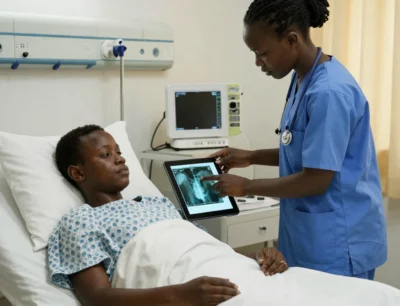

A Practical Model for TB Case Finding: AI Screening, Rapid Testing, and Patient Support

Haryana’s AI-driven TB rollout pairs portable X-rays with rapid molecular tests to find cases earlier—less delay, le

Dementia Care Meets Wearables How Prize Winning AI Smart Glasses Could Scale via Smartphones

AI smart glasses won a £1m dementia prize. Here’s how they guide daily tasks, what the evidence shows, and why it mat

Bottom Image
