

Notice: Test mode is enabled. While in test mode no live donations are processed.

$ 0
Select Payment Method
Apoio Healthbot

Blog Post

Compassion

AI and Healthcare: How Technology is Changing Patient Outcomes

"AI in healthcare isn’t just about technology—it’s about saving lives through early detection and smarter diagnostics."

Artificial Intelligence (AI) continues to revolutionize healthcare, with early disease detection emerging as a pivotal application. By leveraging AI, healthcare providers can identify conditions such as cancer at their nascent stages, significantly enhancing patient outcomes. Below are five recent articles that delve into this transformative trend.


Teladoc Health’s Strategic AI Integration

Teladoc Health has garnered attention as an “under-the-radar AI play,” with its stock surging by 9.7% following the acquisition of Catapult Health for $65 million. The company is utilizing AI to reduce costs, improve care, and expand margins, signaling a shift from being viewed as a pandemic-dependent entity to a profitable, AI-driven healthcare provider. [barrons.com]


AI-Enhanced Body Scanning for Early Detection

The NHS in Britain is incorporating AI-based platforms, such as Edith, to accelerate breast cancer screenings. Private companies are also entering the health screening market, aiming to cater to health-conscious consumers. Swedish start-up Neko, valued at $1.7 billion, aims to revolutionize healthcare with comprehensive checks in a spa-like setting. US companies like Ezra and Prenuvo and UK’s Scan.com are expanding MRI-based diagnostic services. [ft.com]


NHS Trials AI for Breast Cancer Screening

The NHS is launching an £11 million trial using artificial intelligence (AI) to screen for breast cancer, involving nearly 700,000 British women. The AI technology will compare new breast scans with thousands of previous scans to detect abnormalities early, potentially allowing one radiologist to do the work of two and spot more cancers in their early stages. If successful, this trial, starting in 30 clinics in England, could expand to the entire NHS. [thescottishsun.co.uk]


AI’s Role in Predicting Health Risks

A physician AI expert and co-principal investigator of the landmark Apple Heart Study says the next wave of AI in healthcare will shift from diagnosing existing conditions to forecasting future health risks, paving the way for proactive and preventive care.


AI’s Potential to Revolutionize Global Healthcare

With 4.5 billion people currently without access to essential healthcare services and a health worker shortage of 10 million expected by 2030, AI has the potential to help bridge that gap and revolutionize global healthcare. It could even get us back on track to meet the United Nations’ Sustainable Development Goal of achieving universal health coverage by 2030. 

 
Conclusion

AI-driven early disease detection is revolutionizing healthcare by enabling faster, more accurate diagnoses and improving patient outcomes. From Teladoc Health’s strategic AI integration to NHS trials for breast cancer screening and private companies offering AI-powered full-body scans, these innovations are making preventive healthcare more accessible and efficient. The shift towards predictive AI in healthcare signifies a future where diseases can be identified before symptoms appear, leading to timely interventions and better overall health. As AI continues to evolve, its role in early disease detection will only become more vital, reducing healthcare costs and saving countless lives worldwide.

Similar Posts

AI in Biotech: What Today’s Deals Reveal About Tomorrow’s Treatments

AI drug discovery is scaling fast. Here’s what an expanded Insilico Medicine partnership means for faster medicines an
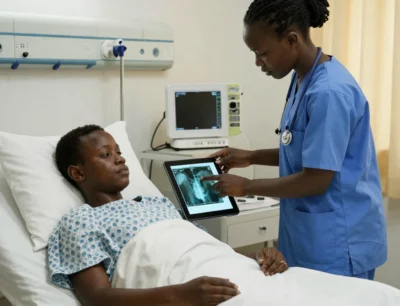
A Practical Model for TB Case Finding: AI Screening, Rapid Testing, and Patient Support

Haryana’s AI-driven TB rollout pairs portable X-rays with rapid molecular tests to find cases earlier—less delay, le

Dementia Care Meets Wearables How Prize Winning AI Smart Glasses Could Scale via Smartphones

AI smart glasses won a £1m dementia prize. Here’s how they guide daily tasks, what the evidence shows, and why it mat

Bottom Image
