
Notice: Test mode is enabled. While in test mode no live donations are processed.

$ 0
Select Payment Method
Apoio Healthbot

Blog Post

Compassion

AI-Powered Lung Cancer Screening in Public Hospitals: A Scalable Path to Earlier Detection

“When AI is embedded into everyday hospital workflows, early detection becomes a system capability—not a privilege.”

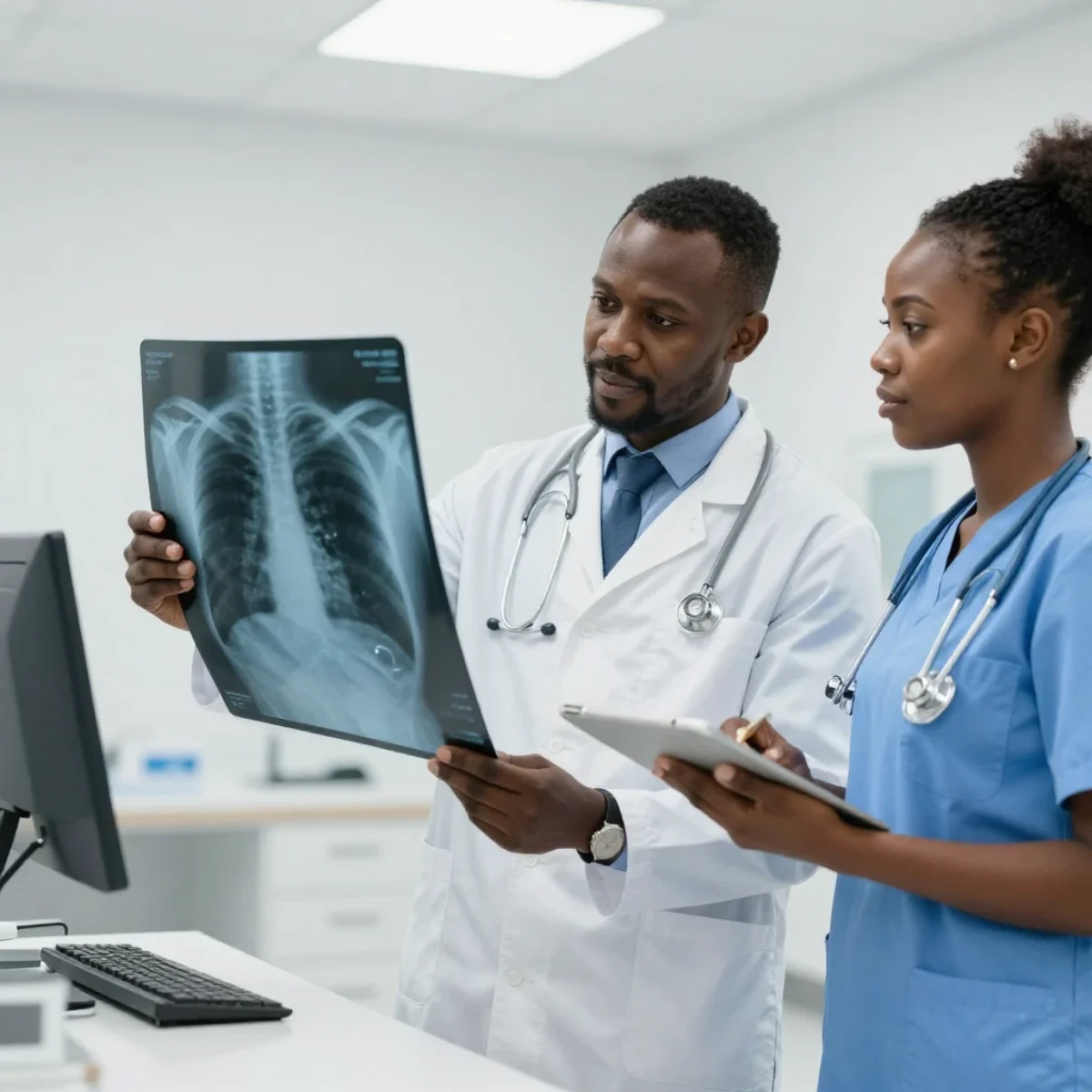
Telangana is about to test a powerful idea at public hospital scale: use artificial intelligence on routine chest X rays to flag people who may be at high risk of lung cancer, then fast track them into confirmatory diagnosis and care. Under a new memorandum of understanding, AstraZeneca Pharma India and the Government of Telangana plan to roll out AI-powered lung cancer screening across 20 public healthcare facilities, integrating Qure.ai’s AI enabled chest X ray workflow into everyday clinical practice.

This matters because lung cancer is frequently diagnosed late, when treatment options are narrower and outcomes are worse. The World Health Organization highlights how screening high risk individuals can enable earlier detection and improve survival, especially in settings where late presentation is common.


What Telangana and AstraZeneca actually announced

According to multiple reports, the programme will deploy Qure.ai’s AI enabled chest X ray solution in routine workflows to help clinicians identify high risk pulmonary nodules and additional lung conditions, then refer flagged patients for confirmation tests or structured follow up. [ETHealthworld]

Two practical signals in the announcement are easy to miss but critical for impact at scale:

  • Workflow integration in public facilities, not a standalone pilot. The intent is to embed screening into day to day service delivery.
  • Training and implementation support. AstraZeneca has described training for healthcare workers and infrastructure support as part of rollout, which is often the difference between an AI tool that sits unused and one that becomes routine.


How AI-powered lung cancer screening with chest X rays works in practice

Global guidelines typically recommend low dose computed tomography, often shortened to LDCT, as the screening test for eligible high risk groups. The US Preventive Services Task Force and the US Centers for Disease Control and Prevention both emphasise LDCT as the recommended screening approach.

So why use chest X rays at all? Because chest X rays are far more available in many public systems, and AI can act as a triage layer to spot patterns humans may miss when workloads are heavy. Evidence reported by the Radiological Society of North America shows AI assistance can significantly improve lung nodule detection on chest radiographs in real clinical practice.

In a well designed pathway, the logic is:

  1. Patient gets a chest X ray as part of routine care or targeted outreach.
  2. AI flags suspected nodules or high risk findings.
  3. Clinician reviews the result and decides next steps.
  4. High risk patients move to confirmatory testing, often LDCT where available, and onward referral.


Qure.ai has also published product and evidence updates describing lung nodule focused tools and performance work, including FDA clearance related announcements for lung nodule detection.


Why this approach can be a big deal for public hospitals

Public hospitals often face three constraints at once: limited radiology capacity, high patient volume, and fragmented referral pathways. AI can help with the first two, but only if the pathway solves the third.

AstraZeneca’s own reports from other markets describe how AI enabled chest X ray screening can broaden access where LDCT capacity is limited, and how partnerships have aimed to screen very large populations by building referral links for follow up.

For health leaders across Africa, Telangana’s design choice is especially relevant: it uses a diagnostic asset most systems already have, chest X ray, and attempts to make it smarter without waiting for a full LDCT screening network to appear.


The implementation details that will determine success

AI-powered lung cancer screening is not just an algorithm problem. It is a health system design problem. Here is what to watch closely in Telangana, and what other public systems can copy.


1. Clear eligibility and targeting

If everyone gets scanned without risk targeting, referral services can be overwhelmed. If only obvious cases are scanned, you miss the point of early detection. Many systems start with high risk groups and then expand as capacity stabilises, aligning with evidence based eligibility logic used in LDCT screening programmes.


2. Confirmatory testing capacity and fast referral

Screening without confirmation creates anxiety and delays. The Telangana plan explicitly links AI flagging to confirmation tests or follow up, which is essential.


3. Data stewardship and trustworthy AI operations

Public trust depends on clarity about how images are stored, who can access them, and how models are updated. This is where broader governance work on trustworthy AI systems becomes directly practical for frontline services.


4. Workforce enablement, not replacement

Some of the most credible AI stories in imaging focus on reducing reporting burden and improving consistency. Microsoft’s radiology workflow work at RSNA underlines how AI can support radiologists and reporting workflows rather than replace clinical judgment.


Funding and partnership lessons that travel well

This Telangana partnership is a public sector plus industry plus startup model: government facilities, a pharmaceutical partner supporting rollout, and a specialist AI imaging vendor embedded into workflow.

For African ministries of health, cancer centres, NGOs, and funders, the transferable lesson is not the brand names. It is the structure:

  • Government defines the public health pathway and accountability.
  • Commercial partners bring technology, training, and implementation support.
  • NGOs and community organisations can drive awareness, risk targeting, and follow up navigation.
  • Funders and blended finance can underwrite devices, connectivity, maintenance, and evaluation.


What to replicate across Sub Saharan Africa, a practical starter blueprint

If you are planning AI-powered lung cancer screening in public hospitals, consider a phased approach:

  • Phase one: Pick 10 to 30 facilities with reliable X ray throughput and referral access. Define the target population and confirmation pathway.
  • Phase two: Train staff, set performance thresholds, and run weekly quality review meetings with radiology and pulmonary teams.
  • Phase three: Add patient navigation for follow up and measure stage shift at diagnosis.
  • Phase four: Expand to district level sites once referral bottlenecks are solved.


On the technology side, follow the evidence and the safety debate. NVIDIA’s work on explainable chest X ray models reflects an important direction: systems that can support review and transparency, which matters when scaling across diverse facilities.


Conclusion

Telangana’s rollout is not just a cancer story. It is a template for how governments can use AI as capacity infrastructure in public hospitals: take a common diagnostic test, make it smarter, and connect it to a faster pathway of care. If executed well, it can shift detection earlier, reduce delays, and build momentum for broader screening programmes that include LDCT where feasible.

Similar Posts

Pregnancy Dating Made Easier How AI Ultrasound Supports Faster Clinical Decisions

Butterfly’s FDA cleared AI ultrasound estimates gestational age in under 2 minutes using a simple sweep, making pregna

AI in Biotech: What Today’s Deals Reveal About Tomorrow’s Treatments

AI drug discovery is scaling fast. Here’s what an expanded Insilico Medicine partnership means for faster medicines an

A Practical Model for TB Case Finding: AI Screening, Rapid Testing, and Patient Support

Haryana’s AI-driven TB rollout pairs portable X-rays with rapid molecular tests to find cases earlier—less delay, le

Bottom Image