
Notice: Test mode is enabled. While in test mode no live donations are processed.

$ 0
Select Payment Method
Apoio Healthbot

Blog Post

Compassion

The Future of Respiratory Diagnostics Starts with This AI Innovation

“With AI-powered digital twins, we’re not just imaging the lungs — we’re navigating them in real time. It’s precision care at a global scale.”

The recent announcement by L&T Technology Services (LTTS) that it is rolling out an AI‑powered digital twin platform for respiratory diagnostics — in collaboration with NVIDIA — marks a significant milestone for healthcare technology. This initiative offers a concrete example of how AI and digital twin technology can improve diagnostic accuracy, clinical planning, and access to care. In this blog post, I dive deep into what this development means, why it matters, and how it aligns with broader trends in AI‑driven healthcare.


What’s New: Digital Twin for Lungs

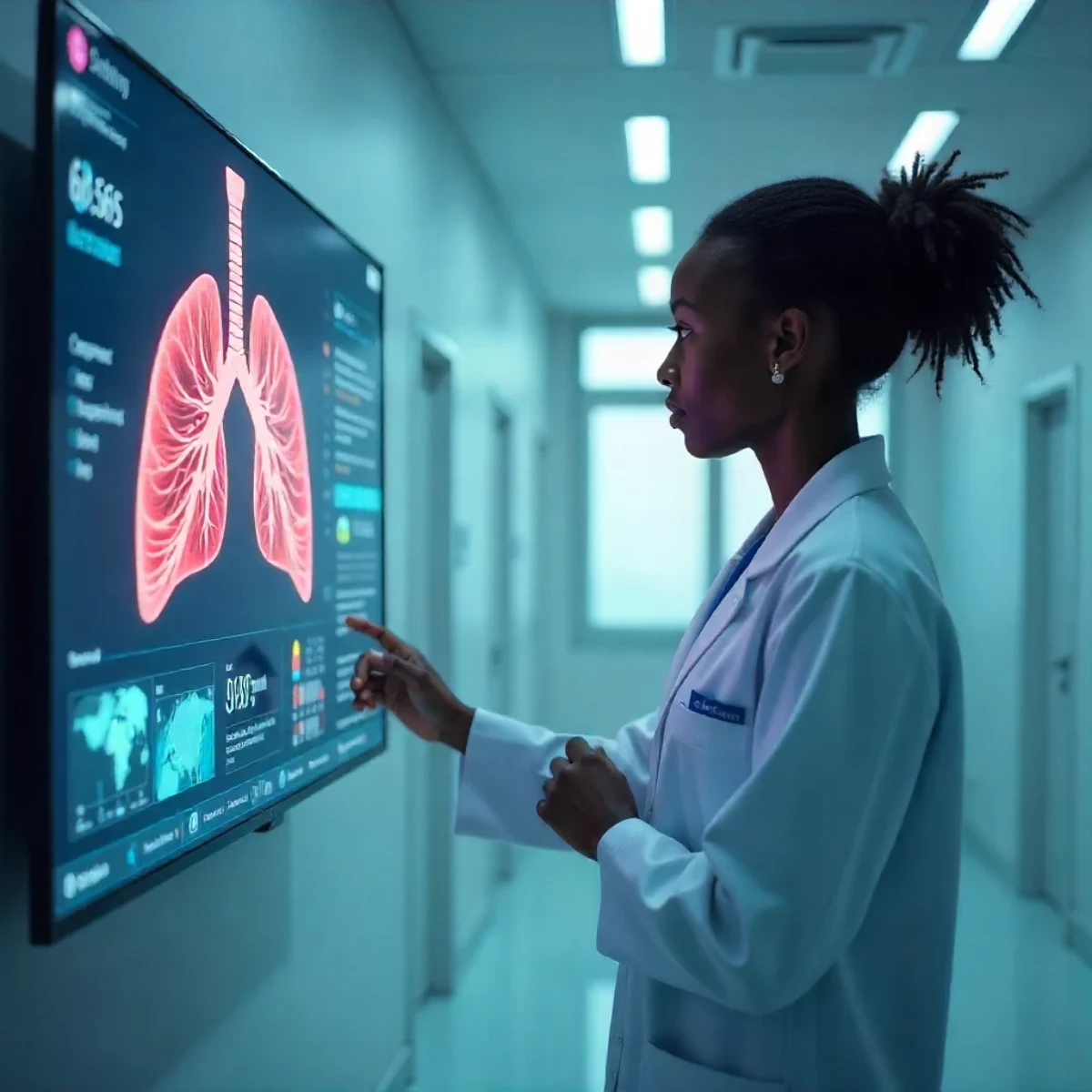
According to the official press release by LTTS, the new solution leverages CT imaging and deep‑learning models to construct a 3D digital twin of a patient’s lung anatomy, including airways, blood vessels, lobes, and lesions. [Business Wire]

Powered by NVIDIA MONAI (for medical image segmentation) and NVIDIA TensorRT (for optimized AI inference), the platform enables interactive visualization, path‑planning, and navigation support — for example, during bronchoscopy, a procedure used to inspect the lungs and air passages. [The Tribune]

In effect, what used to be static 2D or 3D CT/scan snapshots can now become “living, evolving” digital models that better reflect real‑world anatomy and help clinicians simulate, plan, and navigate complex interventions. [MarketScreener]

LTTS will unveil this platform publicly at the Radiological Society of North America (RSNA) 2025 conference. [Techcircle]


Why This Matters: Clinical & Public Health Impact

• Precision Diagnostics & Surgical Planning

By converting scans into detailed digital twins, clinicians can more accurately locate regions of interest (e.g., lesions or tumors), better understand the three-dimensional relationships among airways, blood vessels, and lung lobes, and plan interventions — such as bronchoscopy or surgery — with far greater precision. This is especially important for conditions like lung cancer, chronic obstructive pulmonary disease (COPD), or complicated infectious diseases. [Via TT]

The possibility of real‑time navigation support in procedures may reduce the risks of complications, shorten procedure times, and improve overall outcomes. The visualization and interactive nature of the digital twin could also support more confident decision‑making by multidisciplinary care teams.


• Accessibility, Scalability, and Lower Latency for Global Providers

One of the strengths highlighted by LTTS is that the solution is designed for scalable, low-latency deployment.

This is crucial for broadening access: hospitals or clinics in low‑resource settings (common in many parts of the Global South) could, in principle, adopt such AI‑enabled platforms — reducing dependence on scarce expert radiologists or specialized imaging facilities.

If successfully deployed across geographies, this can democratize access to high‑precision respiratory diagnostics — a critical need, especially in regions burdened by respiratory diseases but lacking advanced medical infrastructure.


• Evolving Digital Twins — Toward Long‑Term Patient Monitoring & Personalized Care

Because the platform aims to create “living” models, it becomes possible to track changes in lung anatomy over time — e.g., tumor growth or shrinkage, progression of lung disease, response to therapy, or changes after an infection.

Such longitudinal digital twins could pave the way for more personalized, dynamic care: clinicians could simulate different treatment scenarios, anticipate complications, and adapt interventions based on evolving anatomy.


How This Fits Into Broader Trends

The concept of a “digital twin” — a virtual representation of a physical system or anatomic structure — originally rose to prominence in manufacturing and engineering.

In healthcare, use of AI‑powered digital twins remains an emerging but highly promising area. For example, research frameworks like Lung-DT have demonstrated how AI and sensor data can produce a digital twin of a patient’s respiratory health — enabling continuous monitoring and automated classification of lung diseases from X‑rays with high accuracy.

The LTTS–NVIDIA collaboration builds on and accelerates these broader scientific and clinical trends by combining real-world imaging (CT scans), deep learning, and high-performance computing — making patient‑specific, interactive digital twins a practical reality rather than just a research concept.

Moreover, AI-driven digital twin frameworks are being explored beyond diagnostics. For oncology care, for example, studies are proposing entire “digital twin ecosystems” to optimize clinical workflows, personalize treatment paths, and support decision-making over the cancer care continuum.


What It Means for the Global South & Future of Healthcare – Why It Matters for an Audience of Change‑Makers

From the vantage point of technology-driven healthcare impact in under-resourced settings, the LTTS initiative offers a blueprint for bridging gaps:

  • Lowering dependence on specialized radiology infrastructure — If AI-powered digital twin platforms can be deployed with relative ease (with CT imaging + adequate compute), hospitals in low- and middle-income countries could access diagnostics on par with leading centers.

  • Improved outcomes through better diagnostics & planning — Early detection and accurate mapping of lung lesions could lead to earlier, more effective interventions — crucial for diseases like lung cancer or advanced tuberculosis, which disproportionately affect populations in the Global South.

  • Facilitating tele‑radiology & remote consultation — 3D digital twins could be shared across geography, enabling expert radiologists or specialist teams in major centers to assist clinicians elsewhere, improving equity in care.

  • Foundation for further innovation — Once digital twin infrastructure is adopted, it can be extended: integrating physiological data, longitudinal monitoring, predictive analytics, personalized treatment simulations — paving the way for precision medicine and preventive care.

For an audience passionate about how AI and emerging technologies can improve healthcare access and outcomes in developing regions, this is a concrete, near-term example of transformational potential.


Looking Ahead: Challenges, Opportunities & What To Watch

While the promise is immense, the real-world adoption of AI-powered digital twins for respiratory diagnostics will depend on several factors:

  1. Regulatory and clinical validation — For widespread clinical adoption, platforms must undergo rigorous validation (safety, accuracy, reproducibility) and meet regulatory standards.

  2. Infrastructure and access — CT imaging capabilities, sufficient compute resources (GPUs), and trained personnel must be available — which can be a challenge in low-resource settings.

  3. Integration with existing workflows — For clinicians, the new platform must integrate seamlessly with PACS (Picture Archiving and Communication System), EHRs, and existing diagnostic workflows.

  4. Sustainability and cost-effectiveness — Success will depend on whether such solutions deliver value for money, especially compared to traditional diagnostics, in a wide variety of healthcare settings.

Still, the opportunities are huge. If implemented thoughtfully, this technology could democratize access to advanced diagnostics, enable earlier and more accurate detection of serious respiratory conditions, and ultimately improve patient outcomes at scale. For regions with limited resources — like many parts of Sub-Saharan Africa, Southeast Asia, or remote/rural areas — that could represent a major stride forward.


Conclusion: A New Era for Respiratory Diagnostics & Why It Matters

The collaboration between LTTS and NVIDIA to develop an AI-powered digital twin platform for lung diagnostics is more than just a technical breakthrough — it represents a tangible step toward bringing high-precision, AI-driven care to underserved regions. For hospitals, clinics, and health systems seeking to leverage technology to overcome resource constraints, this initiative offers a promising path forward.

For stakeholders — from policymakers and public health leaders to MedTech innovators and NGOs — now is the moment to pay attention: the digital twin revolution in healthcare is not a distant dream, but a rapidly emerging reality.

Similar Posts

Doctors, Data & Dignity: The Vatican’s Call for Human-Centered AI in Medicine

The Vatican gathers doctors and ethicists to explore how AI can transform healthcare while protecting human dignity and

AI Meets 5G: The Digital Power Duo Transforming Patient Care

AI and 5G are revolutionizing healthcare—enabling real-time care, smarter diagnostics, and connected systems that put

The Rise of Admin AI: A Budget Essential for Healthcare Systems in 2026

Admin AI is going mainstream. In Q3 2025, it shifted from pilot to priority—and by 2026, it will be a standard budget

Bottom Image